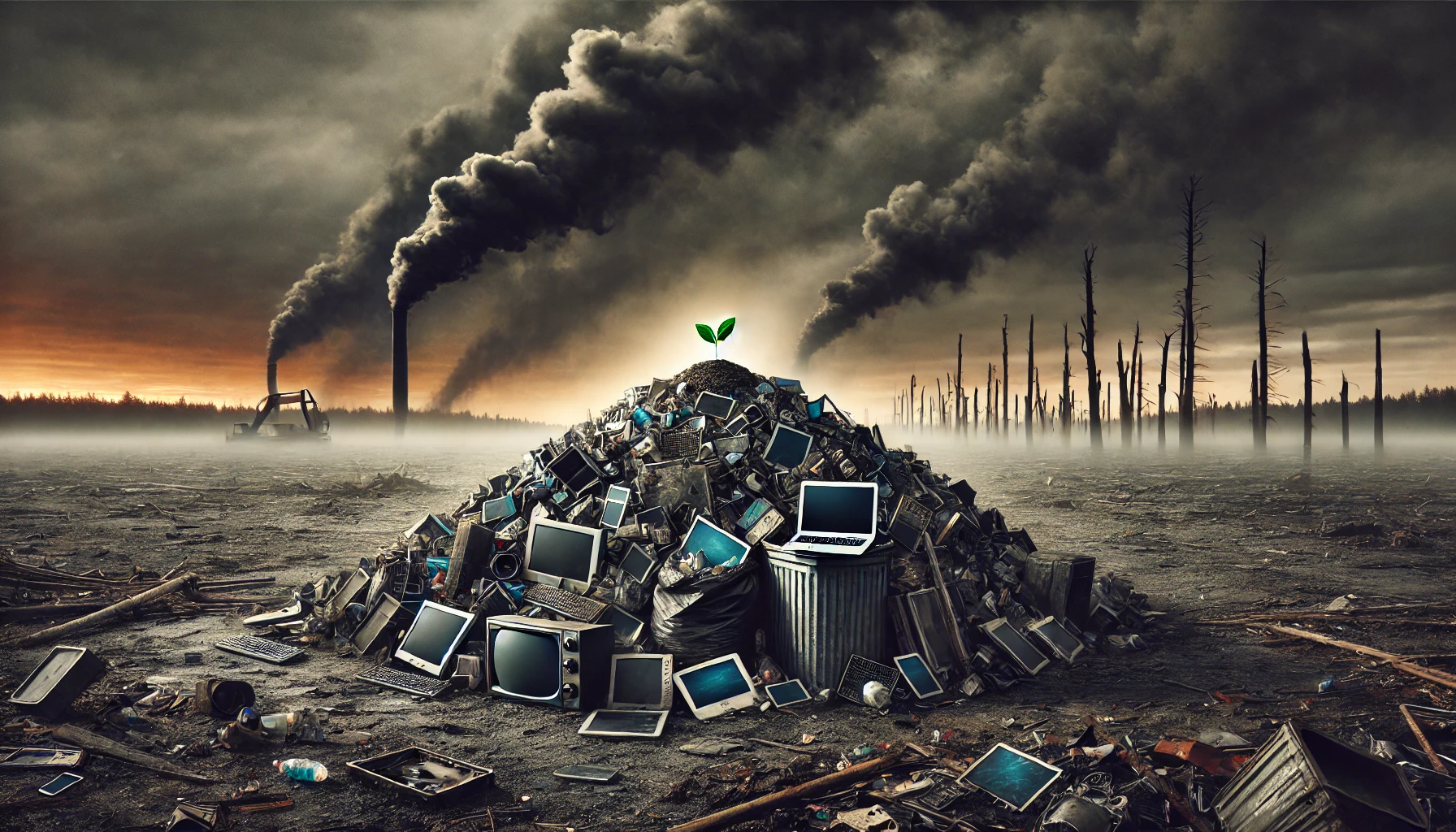
The problem of electronic waste pic.twitter.com/5czFpij9x4
— YMuriel – BIM 建筑师 (@YMuriel) December 9, 2025
I want to focus on the pressing issue of household waste, particularly appliances and gadgets, which have become indispensable to our lives. Even so, this throwaway culture is having disastrous effects on the environment. The growing problem of electronic or «e-waste» is a significant challenge that we must urgently address in the broader context of combating climate change.
We might consider this era not as one of technological advancement, albeit it is often framed as such, but rather as the «era of waste.» This is because the global economy heavily depends on a cycle of production, use, and waste, which repeats across industries. All the same, humans are not inherently wasteful. In fact, while modern society seems overly consumptive, historical evidence shows that humans were once extraordinarily resourceful. For centuries, people used local materials to create reusable tools, a stark contrast to today’s rapid consumption facilitated by innovations in transportation and global trade.
The shift from resourcefulness to wastefulness emerged in the mid-20th century, with the rise of the consumer lifestyle. Modern products are contributing to this issue due to planned obsolescence—a practice that deliberately shortens the lifespan of items, making them difficult to repair and encouraging replacement. This trend has been especially damaging in the realm of small consumer electronics, leading to an unprecedented build-up of e-waste.
Nonetheless, efforts to combat planned obsolescence are growing. In France, for instance, legislation now requires manufacturers to provide repair information, a step influenced by the success of companies advocating for transparency and repairability. While these measures have been comparatively successful, the problem persists. What’s more worrying than the planned obsolescence itself is its widespread acceptance as a standard business model.
Looking ahead, the future of e-waste management lies in transformative changes to materials and manufacturing processes. Researchers are exploring sustainable alternatives, such as using biodegradable or easily dismantled components through methods like e-processing. Materials like hemp, bamboo, and seaweed offer viable and eco-friendly substitutes to mined resources. These innovations not only promise to reduce hazardous byproducts but also hold the potential to eliminate habitat destruction caused by metal extraction.
Though challenges remain, researchers are optimistic about the possibilities. They believe that advances in material science and engineering could usher in a new era, one where electronic waste becomes a relic of the past. Nothing like as impactful as technological progress itself, the movement toward sustainable practices is, nonetheless, a critical step in addressing the e-waste crisis.
 @Yolanda Muriel

 yolandamuriel.com