By 2022, machine learning had become the backbone of a rapidly growing range of powerful products. Architectures such as transformers and advances in natural language processing began to extend. Among the most significant developments of the past four years is the rise of MLOps, a term that encapsulates the operational frameworks and methodologies needed to scale, maintain, and govern machine learning systems effectively.
MLOps is a relatively new discipline that focuses on the operational side of machine learning, particularly the deployment, maintenance, and large-scale operation of ML systems in production. It emphasizes building robust infrastructures that enable models to be developed in a repeatable, reliable, and well-governed manner. In addition, MLOps addresses the challenges of running ML systems at scale while fostering effective collaboration across teams, ensuring that machine learning solutions remain sustainable, efficient, and aligned with organizational goals
Selecting problems for machine learning should follow standard prioritization principles, favoring use cases with high impact and relatively low cost. High-impact opportunities typically involve reducing product friction, improving complex or inefficient pipeline components, or leveraging inexpensive predictions in areas where ML has proven industry value. Low-cost ML projects are characterized by readily available data and limited risk, particularly in scenarios where incorrect predictions would not lead to severe consequences.
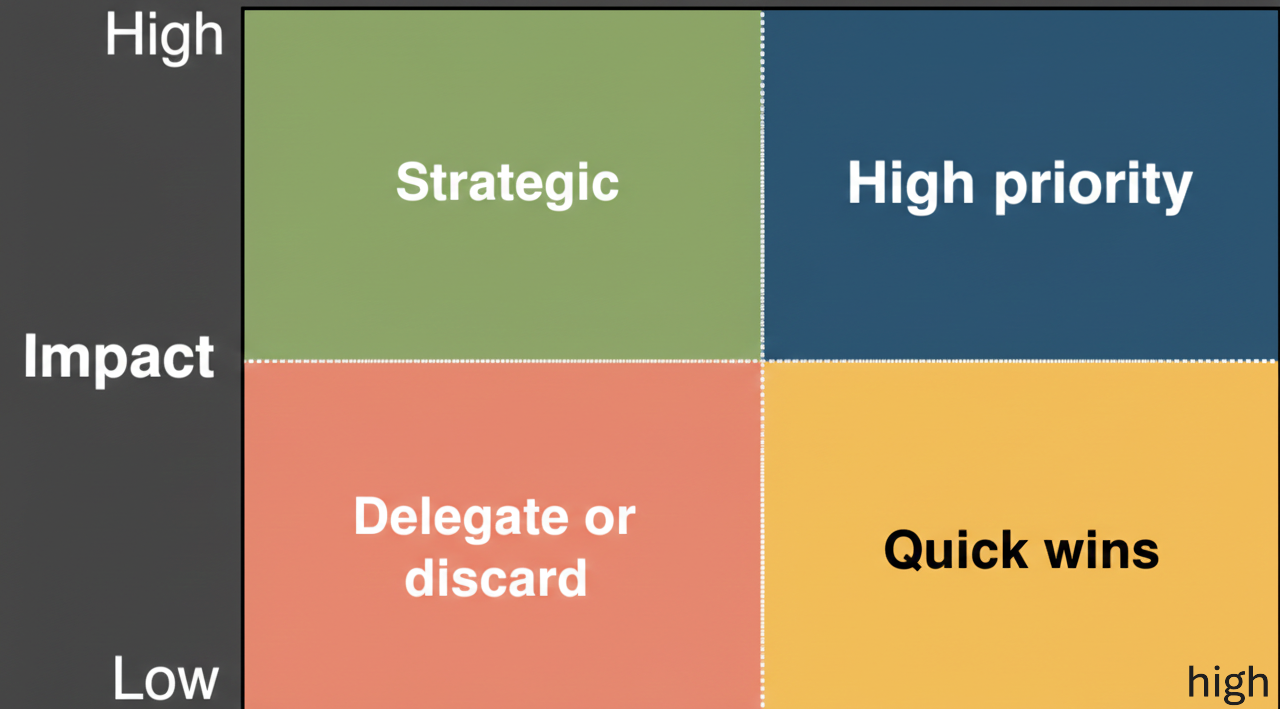
High-Impact Projects
High-impact machine learning projects can be identified using a set of practical heuristics.
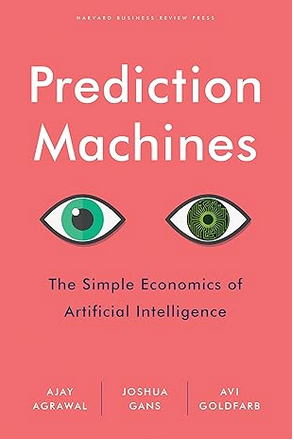
- Focus on problems where machine learning makes previously uneconomical tasks viable by significantly lowering the cost of prediction. Since prediction is central to decision-making, reducing its cost can unlock high-impact opportunities. A good resource here is the book «Prediction Machines: The Simple Economics of AI.»
- Prioritize machine learning projects that directly address your product’s core needs, as exemplified by Spotify’s Discover Weekly, which was designed around clear product-driven principles to deliver high user impact.

© Image. https://spotify.design/
«Machine Learning (ML) has become an indispensable tool at Spotify for delivering personal music and podcast recommendations to over 248 million listeners across 79 markets and in 24 languages. We believe designers have a vital role in ML-driven initiatives, by bringing a human-centered perspective to a technology that can too easily overlook the end-user. If we don’t apply a human-centered lens to our design process, we risk optimizing for solutions that don’t resonate with users—or worse, completely deliver the wrong solution.» (Quotation of spotify).

«We realized we needed to reshape the algorithms in a human-centered way, so we started to dig deeper and ask ourselves questions like: What does it mean to like an artist, album, playlist or podcast? How does a user’s context shape their decision of what to listen to? What does someone need to know before making the choice of what to listen to?
Asking these questions and dozens—maybe hundreds—more forced us to put our users’ needs front and center. We found this approach changed how we designed the page and contextualized our recommendations.» (Quotation of spotify).
© Spotify.
- Focus on problems well-suited to ML, particularly “Software 2.0” tasks—complex, manually defined system components that can be effectively automated using machine learning.
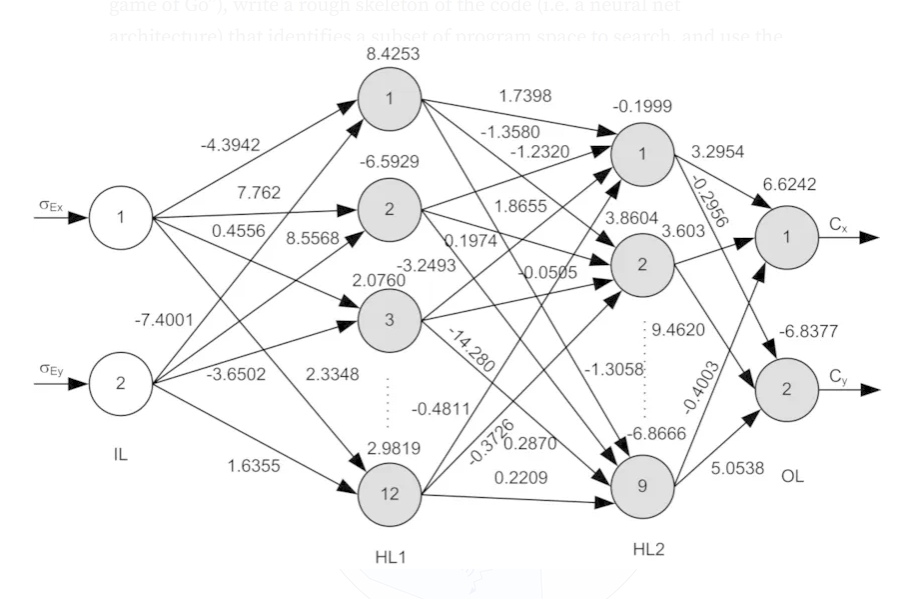
©https://karpathy.medium.com/
«In contrast, Software 2.0 is written in much more abstract, human unfriendly language, such as the weights of a neural network. No human is involved in writing this code because there are a lot of weights (typical networks might have millions), and coding directly in weights is kind of hard (I tried).» (quotation of Andrej Karpathy).
- Examine industry practices by reviewing research papers and blog posts from both leading tech companies and innovative startups to identify successful ML applications.
Low-Cost Projects
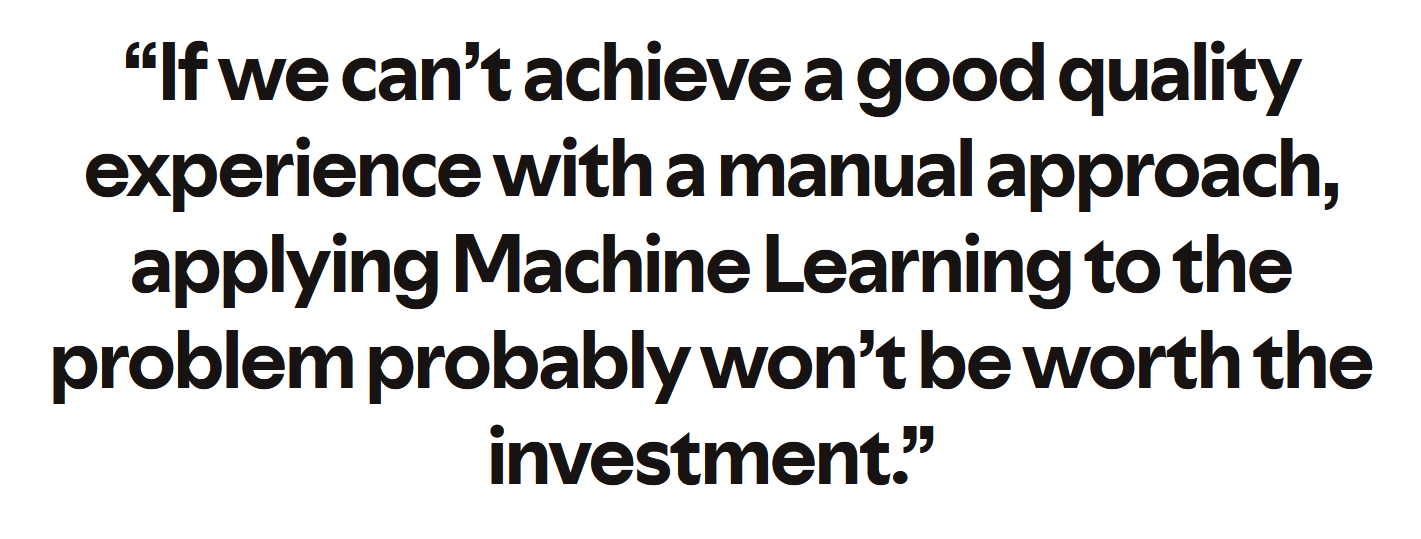
The cost of an ML project is mainly driven by three factors: data availability, including ease of acquisition, labeling, volume, stability, and security requirements; accuracy requirements, since higher precision increases costs and raises ethical considerations, with costs often scaling super-linearly; and problem difficulty, determined by how well-defined the problem is, availability of prior research, and computational demands, making feasibility challenging to assess.
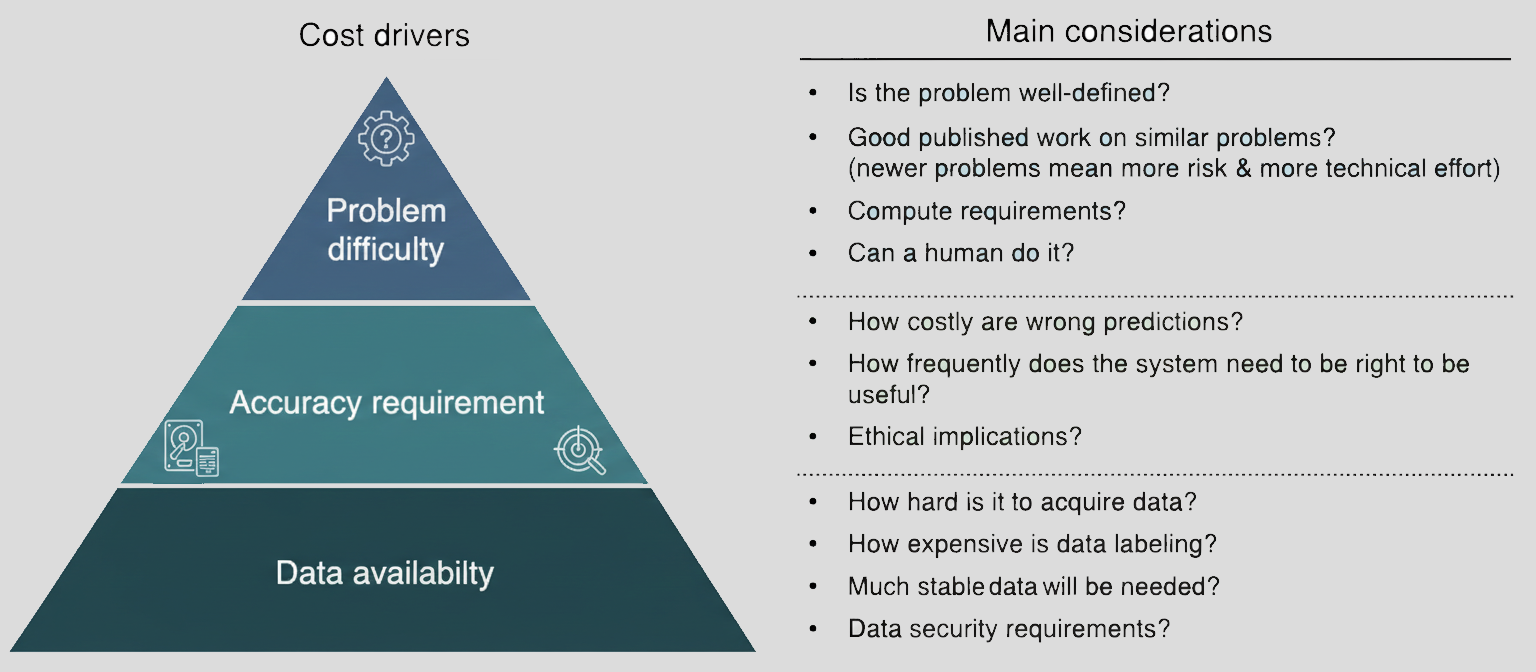
What’s Hard in ML?
Hard ML problems typically fall into three categories: complex outputs, where predictions are ambiguous or high-dimensional; high-reliability requirements, where precision and robustness are critical but ML systems can fail unpredictably; and generalization challenges, involving research-level tasks like handling out-of-distribution data, reasoning, planning, or causal understanding.
ML Product Archetypes
ML product archetypes are categorized by their interaction with real-world use cases:
-
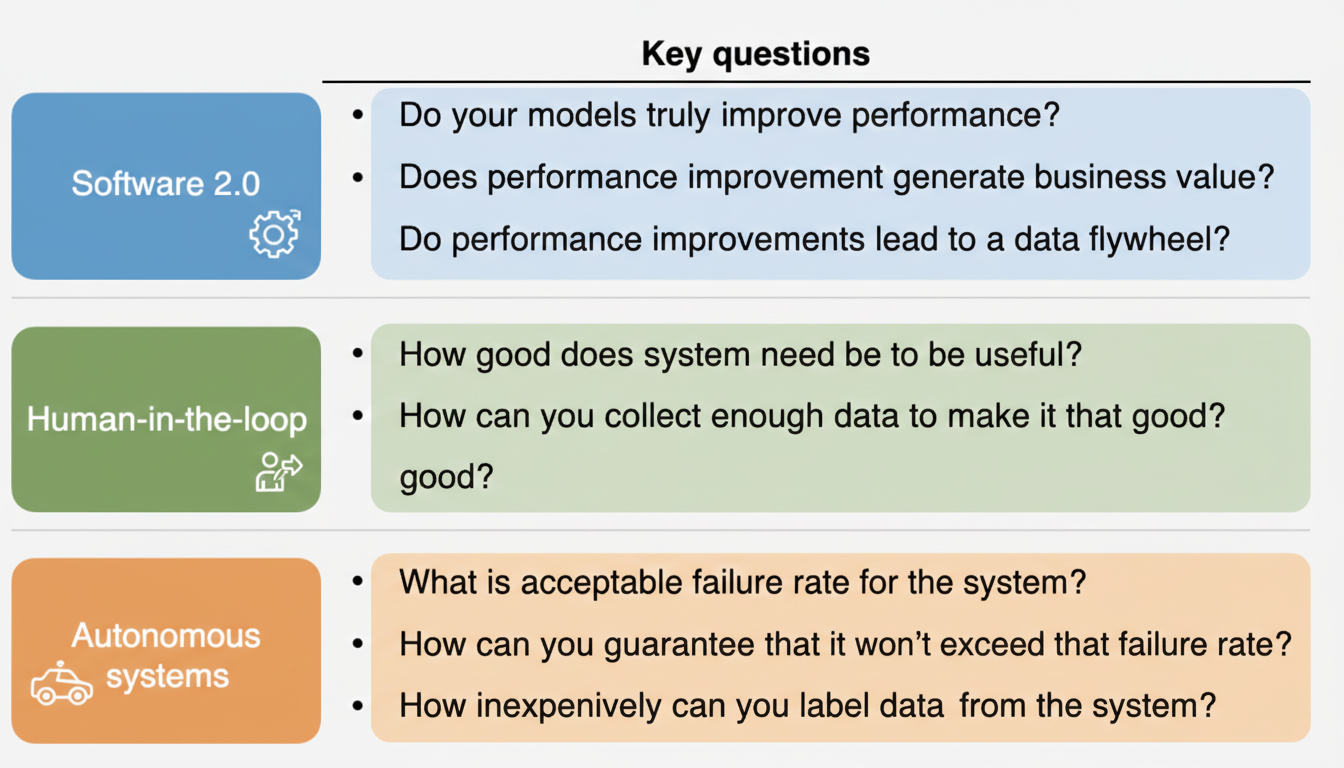
Software 2.0 – Enhances existing automated processes with ML, such as improving code completion in IDEs (e.g., GitHub Copilot).
-
Human-in-the-loop systems – Augments human decision-making or efficiency, where humans validate or guide ML outputs, like converting sketches into slides.
-
Autonomous systems – Operates independently without human intervention, exemplified by fully self-driving vehicles.
Data Flywheels
In Software 2.0 projects, leverage the data flywheel: as the model improves, the product becomes better, attracting more users and generating additional data, which in turn further enhances the model—a self-reinforcing cycle that represents the ideal ML project.
 @Yolanda Muriel

 yolandamuriel.com