When building deep learning systems that move beyond toy datasets and into real-world workflow — from rapid experimentation to production-grade models — the choice of development environment becomes a strategic decision rather than a convenience.
Jupyter Notebook remains indispensable for early-stage model design because its cell-based execution fosters iterative probing in ways that traditional scripts cannot replicate.
However, as the project grows in complexity, Visual Studio Code becomes superior for implementing reproducible training pipelines, integrating unit tests (e.g., for data validation), and managing configuration files that govern hyperparameter sweeps.
In practice, expert practitioners like Andrej Karpathy have emphasized that notebooks should be treated as ephemeral workbenches, whereas robust model development should migrate into a structured editor with version control as soon as an idea stabilizes (“notebooks are for prototyping, code repos are for engineering”).
This hybrid approach accelerates deep learning experimentation without sacrificing maintainability or collaboration across teams.
In professional deep learning workflows, the environments are rarely mutually exclusive. Instead, they form a complementary pipeline:
-
Jupyter for ideation and rapid experimentation
-
VS Code for refactoring, testing, and productionization
Expert Article:

©image. https://github.com/ggeop/ML-Project-Template
Why Python Became the Dominant Language in Deep Learning
In modern deep learning ecosystems, Python has emerged not merely as a popular language, but as the de standard for research, experimentation, and production deployment.
Its dominance stems from a rare convergence of factors:
- syntactic clarity, its code structure is clean, readable, and close to natural language, making it easier to understand and maintain.
- an extraordinarily rich scientific computing stack (Stack: the layered set of technologies that work together (libraries, frameworks, tools), the extensive ecosystem of specialized libraries and tools available in Python for scientific and numerical computation. In other words, Python offers a deeply developed, interconnected ecosystem of high-quality libraries that support advanced mathematical, statistical, and machine learning workflows.
Python’s scientific stack includes multiple layers:
Numerical Foundations
-
NumPy — efficient array computation and linear algebra
-
SciPy — optimization, signal processing, statistics
Data Manipulation
-
pandas — structured data analysis
-
Apache Arrow — high-performance data interchange
Machine Learning
-
scikit-learn — classical ML
-
PyTorch — neural networks
-
TensorFlow — large-scale ML systems
Visualization
-
Matplotlib
-
Seaborn
-
Plotly
- and unparalleled community momentum. The Python ecosystem benefits from a uniquely large and rapidly advancing global community whose collective contributions continuously strengthen and expand the language’s capabilities.
What does “momentum” look like in practice?
Extensive open-source collaboration
Platforms like GitHub host hundreds of thousands of Python repositories, many of which power state-of-the-art AI research.
Educational dominance
Universities and online platforms (e.g., Coursera, edX) overwhelmingly teach machine learning in Python, reinforcing adoption.
Rapid framework evolution
Major libraries such as PyTorch and TensorFlow evolve quickly because thousands of researchers and engineers actively contribute improvements.
Bonus
Expert article:
Don’t Just Track Your ML Experiments, Version Them

©Image. https://dvc.org/
Expert article:
The challenges of reproducibility across ML environments
Website MLflow: debug, test, and evaluate LLM applications, Agents, and Models.
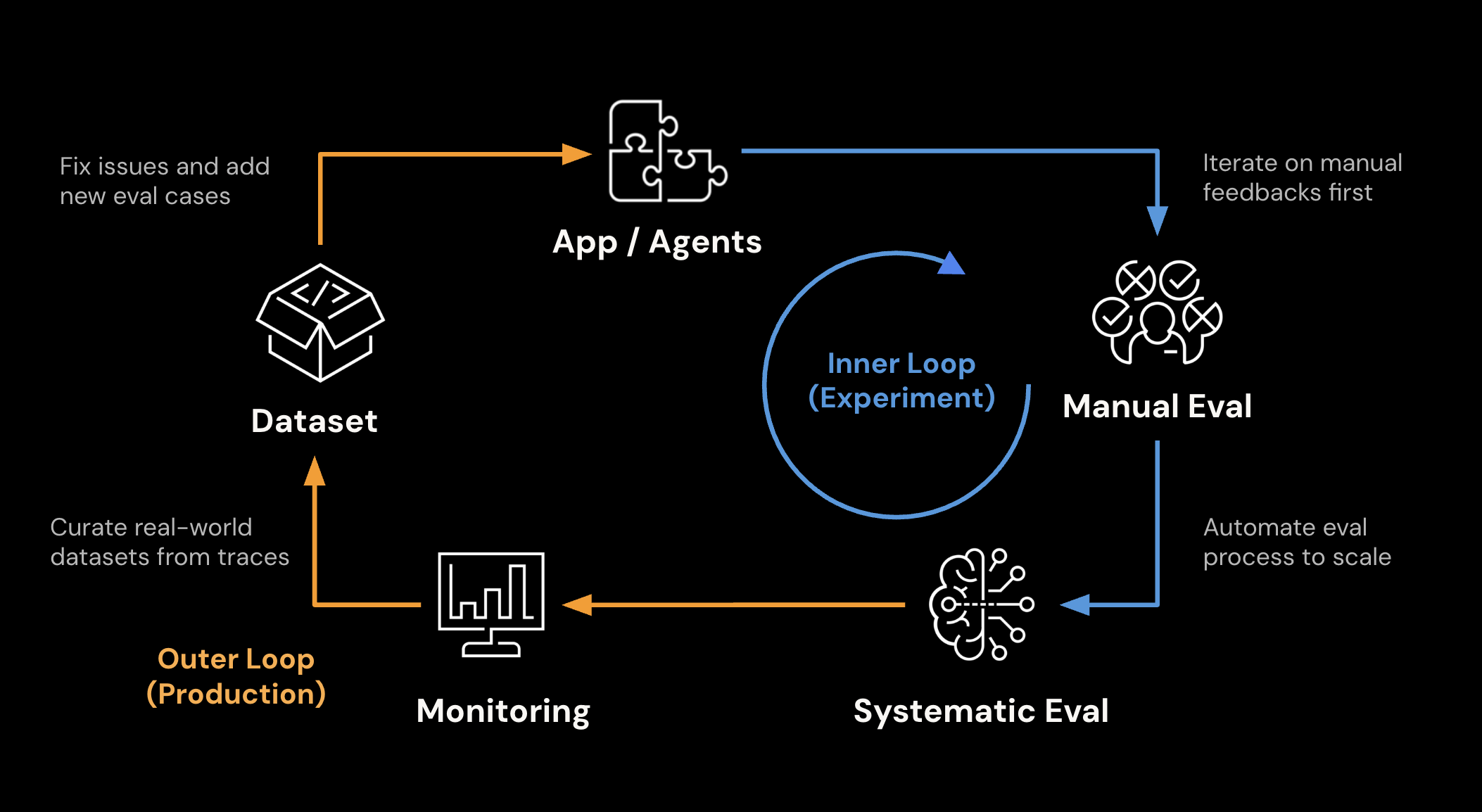
©Image. MLFlow
 @Yolanda Muriel


