Summary:
Discover how I used machine learning not just to translate, but to build a custom learning path for understanding Chinese videos way above my level. A method for fast, personalized progress using real AI — not just shortcuts.
A few days ago, I sat down to watch a Chinese video on machine learning. I was excited about the topic. Motivated to learn. But after 15 seconds, I wanted to close the tab. Why? Because I understood almost nothing.
The video has a level C1 or above. Fast. Natural. Full of technical terms. But instead of giving up, I chose to apply the very subject of the video: machine learning.
When we think about learning Chinese, we often focus on memorizing vocabulary, repeating grammar drills, or waiting until we’re “ready” to tackle real content. But the truth is — that moment never really comes.
I didn’t want another translation.
I didn’t want a simplified version.
What I needed was a bridge between where I am now… and the native content I want to understand.
When we think about machine learning, we imagine algorithms, data, and neural networks. But what if we applied its basic principles to language learning? What if you could train your mind like a model that learns through patterns?
Today, I want to share with you a method inspired by machine learning that helps you understand Chinese videos quickly — even when they’re above your level.
What Does Machine Learning Actually Do?
-
It collects data
-
Detects patterns through training
-
Adjusts its model based on errors
-
Improves its predictions over time
Now Translate That to Language Learning:
-
Your mind = the model
-
The Chinese video = your training data
-
Your goal = to recognize patterns in sound, vocabulary, grammar, and meaning
The Real Insight:
“I didn’t need AI to give me the answers. I needed AI to teach me how to notice.”
That’s what this method is about. Using machine learning not as a crutch, but as a guide to help you build comprehension skills — even with videos that feel far above your level.
I Didn’t Just Translate. I Trained the AI to Learn With Me.
Here’s what I did — and what you can try too:
1. Segment the Video into Micro-Scenes
Use AI tools to split the video into 15–30 second chunks.
Goal: Identify patterns like a recognition model.
-
Break the video into 10-second clips
-
Listen to each while reading the transcript
-
Note any repeated words or expressions you don’t understand
You’re training your brain to connect phonetics + vocabulary + structure.
2. Transcription + Explanation
Ask the AI not just for a transcript, but an explanation of why each phrase is structured that way in Chinese.
Layered Reinforcement: Core Vocab + Phrases
Goal: Optimize your “mental model.”
-
Choose the 10 most important words from the video
-
Learn them with pinyin, meaning, and example
-
Pick 2 key example phrases from the video
This is your basic semantic layer. Just like an ML model builds layers of meaning — so do you.
Step 3: Don’t ask for a translation. Ask for understanding. Let AI show you:
-
Why that sentence is built that way.
-
Which grammar pattern is in use.
-
What would change if the speaker used a different tone or verb.
Step 4: Personalize it.
Highlight the 3–5 words or expressions you didn’t know.
Generate targeted drills inside the context of the video — not generic flashcards.
Step 5: Rewatch. Recall. Rebuild.
After working through the chunks, watch the video again without help.
Then write down what you understood — in your own Chinese.
That’s where the real learning locks in.
The Shift: From Passive to Active Learning
Instead of passively consuming a video with subtitles, you turn the video into a language gym designed for your level, your patterns, your pace.
It’s not just about what the speaker said.
It’s about what you now see in the structure, flow, and intent of the language.
Why This Works
You stop relying on translations.
You build listening skills faster by training with natural speech.
You shift from decoding words to decoding meaning.
You learn to think in Chinese — not just understand it.
The Video That Broke Me (and Taught Me More Than I Expected)
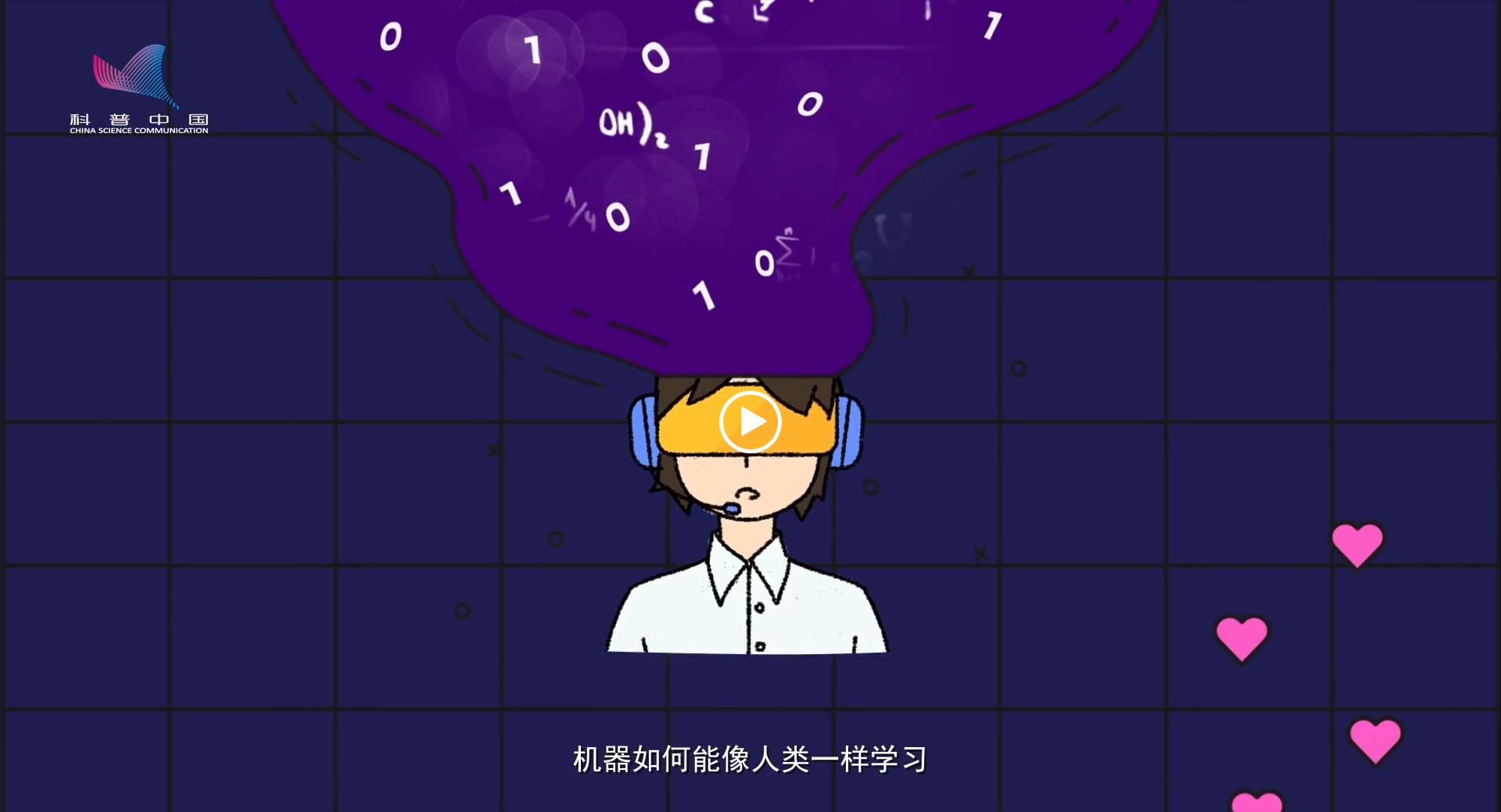
分钟告诉你,什么是机器学习
机器学习是一种通过分析大量数据来训练算法的方法。
它使得计算机能够在没有明确编程的情况下进行预测和决策。
这个过程通常包括三个主要步骤:
首先,数据收集和清洗。
然后,选择合适的模型并进行训练。
最后,评估模型的准确性并在现实中应用它。
机器学习已经广泛应用于各个领域,
如医疗诊断、金融分析、图像识别和自然语言处理。
机器学习是让计算机模仿人类学习的过程。 通过经验积累知识在众多实际应用中展现出巨大潜力。 它的核心思想是利用大量数据训练模型, 使其能够自动识别数据中的模式, 并据此做出决策或预测。 机器学习已在多个领域取得广泛应用。 它通过数据驱动的方式赋予计算机自主学习的能力, 极大地提升了复杂问题的解决效率。 在医疗领域, 机器学习可以通过分析病患数据进行疾病预测和个性化治疗。 在金融领域, 机器学习被用于风险评估和市场预测。 在交通领域, 它支持自动驾驶技术, 使车辆能够自主判断和应对复杂路况。

© Image. https://shkp.org.cn/
Machine learning is the process of enabling computers to imitate human learning.
By accumulating knowledge through experience, it has demonstrated great potential in many practical applications.
Its core idea is to train models using large amounts of data, allowing them to automatically recognize patterns within the data and make decisions or predictions accordingly.
Machine learning has been widely applied across various fields.
It empowers computers with the ability to learn autonomously in a data-driven way, greatly improving the efficiency of solving complex problems.
In the medical field, machine learning can analyze patient data to predict diseases and provide personalized treatments.
In the financial sector, it is used for risk assessment and market forecasting.
In the transportation industry, it supports autonomous driving technology, enabling vehicles to independently assess and respond to complex road conditions.
(Translation of the video)
Ficha de entrenamiento aplicada
Exposición inicial
Escucha sin texto (1 vez)
Palabras reconocidas:
机器学习、计算机、数据、模型、预测、医疗、金融、交通、自动驾驶
Idea general percibida:
El vídeo explica qué es el aprendizaje automático y cómo se aplica en diferentes sectores para mejorar la eficiencia y la toma de decisiones.
Entrenamiento por segmentos
Clip 1: Primeros 15 segundos
Transcripción:
“机器学习是让计算机模仿人类学习的过程。通过经验积累知识,在众多实际应用中展现出巨大潜力。”
Palabras nuevas:
-
模仿 (mófǎng) – imitar
-
经验 (jīngyàn) – experiencia
-
积累 (jīlěi) – acumular
-
潜力 (qiánlì) – potencial
Comprensión actual:
El aprendizaje automático permite que las computadoras imiten el proceso de aprendizaje humano, acumulando experiencia y mostrando un gran potencial en aplicaciones prácticas.
Clip 2: 00:15 – 00:30
Transcripción:
“它的核心思想是利用大量数据训练模型,使其能够自动识别数据中的模式,并据此做出决策或预测。”
Palabras nuevas:
-
核心 (héxīn) – núcleo
-
训练 (xùnliàn) – entrenar
-
模型 (móxíng) – modelo
-
模式 (móshì) – patrón
-
决策 (juécè) – tomar decisiones
-
预测 (yùcè) – predecir
Comprensión actual:
La idea principal es entrenar modelos con grandes cantidades de datos para que puedan reconocer patrones automáticamente y tomar decisiones o hacer predicciones.
Refuerzo: Vocabulario y frases clave
Top 10 palabras nuevas del vídeo
| Palabra | Pinyin | Significado | Ejemplo de frase |
|---|---|---|---|
| 模仿 | mófǎng | imitar | 计算机模仿人类学习。 |
| 经验 | jīngyàn | experiencia | 通过经验积累知识。 |
| 积累 | jīlěi | acumular | 积累大量数据。 |
| 潜力 | qiánlì | potencial | 展现出巨大潜力。 |
| 核心 | héxīn | núcleo | 核心思想是训练模型。 |
| 训练 | xùnliàn | entrenar | 利用数据训练模型。 |
| 模型 | móxíng | modelo | 建立预测模型。 |
| 模式 | móshì | patrón | 识别数据中的模式。 |
| 决策 | juécè | tomar decisiones | 做出智能决策。 |
| 预测 | yùcè | predecir | 预测未来趋势。 |
2 frases importantes
-
“机器学习是让计算机模仿人类学习的过程。”
-
Traducción: El aprendizaje automático permite que las computadoras imiten el proceso de aprendizaje humano.
-
Uso en el vídeo: Introducción al concepto de machine learning.
-
-
“它的核心思想是利用大量数据训练模型。”
-
Traducción: Su idea principal es utilizar grandes cantidades de datos para entrenar modelos.
-
Uso en el vídeo: Explicación del funcionamiento básico del aprendizaje automático.
-
Evaluación: Escucha sin apoyo
Escucha de nuevo sin leer
Nuevas comprensiones:
-
Reconocimiento de términos técnicos como 模型 (modelo) y 预测 (predicción).
-
Mejor comprensión de cómo se aplican estos conceptos en campos como la medicina y las finanzas.
Aspectos a repasar:
-
Pronunciación y entonación de términos técnicos.
-
Comprensión de frases más complejas relacionadas con aplicaciones específicas.
Generalización
Nuevo vídeo (tema similar):
Busca otro vídeo introductorio sobre inteligencia artificial o tecnología en chino.
Reconocimiento de vocabulario o estructuras del vídeo anterior:
Sí/no
Notas:
-
Se repiten términos como 数据 (datos), 模型 (modelo) y 预测 (predicción).
-
Las estructuras explicativas son similares, facilitando la comprensión de nuevos contenidos relacionados.
 @Yolanda Muriel

 yolandamuriel.com