When I first heard about The Wheel of Life, I was utterly amazed. Seldom do you encounter a voice so pure, honest and captivating in autobiographical writing. Like millions of others, I became a fan of Elisabeth Kübler-Ross, whose work on death and dying has profoundly shaped modern attitudes towards end-of-life care. Needless to say, I knew something about her professional achievements, but not until I read this memoir did I realise how truly tragic and demanding her personal life had been.
What new information could one possibly glean about her meteoric rise to fame and her subsequent downfall? Quite a few revelations come to light. The book exposes the price she paid for her success: relentless criticism from the medical establishment, emotional isolation, illness and profound vulnerability. Written with the illusion of a diary, the memoir presents Kübler-Ross as a gifted thinker and compassionate healer who was ultimately let down by those who should have protected and supported her. Had they tried harder, perhaps some of her suffering could have been avoided.
An important message clearly emerges from the book: when someone needs support, we should give it. This is a valuable lesson we can take away from her life story. What The Wheel of Life offers is a strong sense of what made Kübler-Ross unique, yet it also leaves the reader feeling exhausted and overwhelmingly sad.
With intense close-ups into her inner world and moments that function almost like emotional cliff-hangers, the book becomes a genuine tear-jerker. Despite its emotional weight, it is a gripping memoir and undoubtedly worth reading.
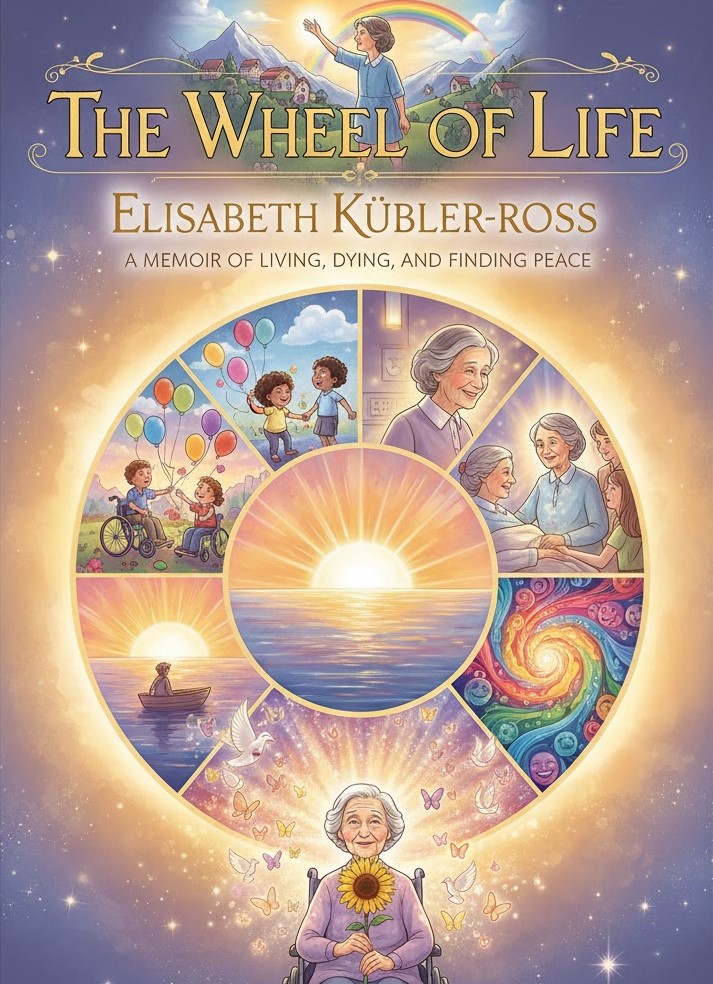
Summary of The Wheel of Life
The Wheel of Life is an autobiographical memoir in which Elisabeth Kübler-Ross reflects on her personal life, professional career, and spiritual beliefs. Best known for her pioneering work with terminally ill patients and for introducing the five stages of grief, Kübler-Ross recounts how her interest in death and dying began in her childhood in Switzerland and later developed during her medical training.
The book follows her meteoric rise to international fame after the publication of On Death and Dying, which transformed medical attitudes toward end-of-life care. Alongside her success, she describes intense opposition from the medical establishment, personal betrayals, and growing isolation. Kübler-Ross also narrates her work with hospice patients, children with terminal illnesses, and AIDS patients at a time when they were widely rejected by society.
In the later part of the memoir, the focus shifts toward spirituality, near-death experiences, and her belief in life after death. She openly discusses her physical decline after a stroke, as well as her emotional vulnerability and search for meaning.
Overall, The Wheel of Life is a deeply personal account of a woman who dedicated her life to helping others face death with dignity, while struggling to find peace and support in her own life.
 @Yolanda Muriel Attribution-NonCommercial-NoDerivs 3.0 Unported (CC BY-NC-ND 3.0)


 yolandamuriel.com