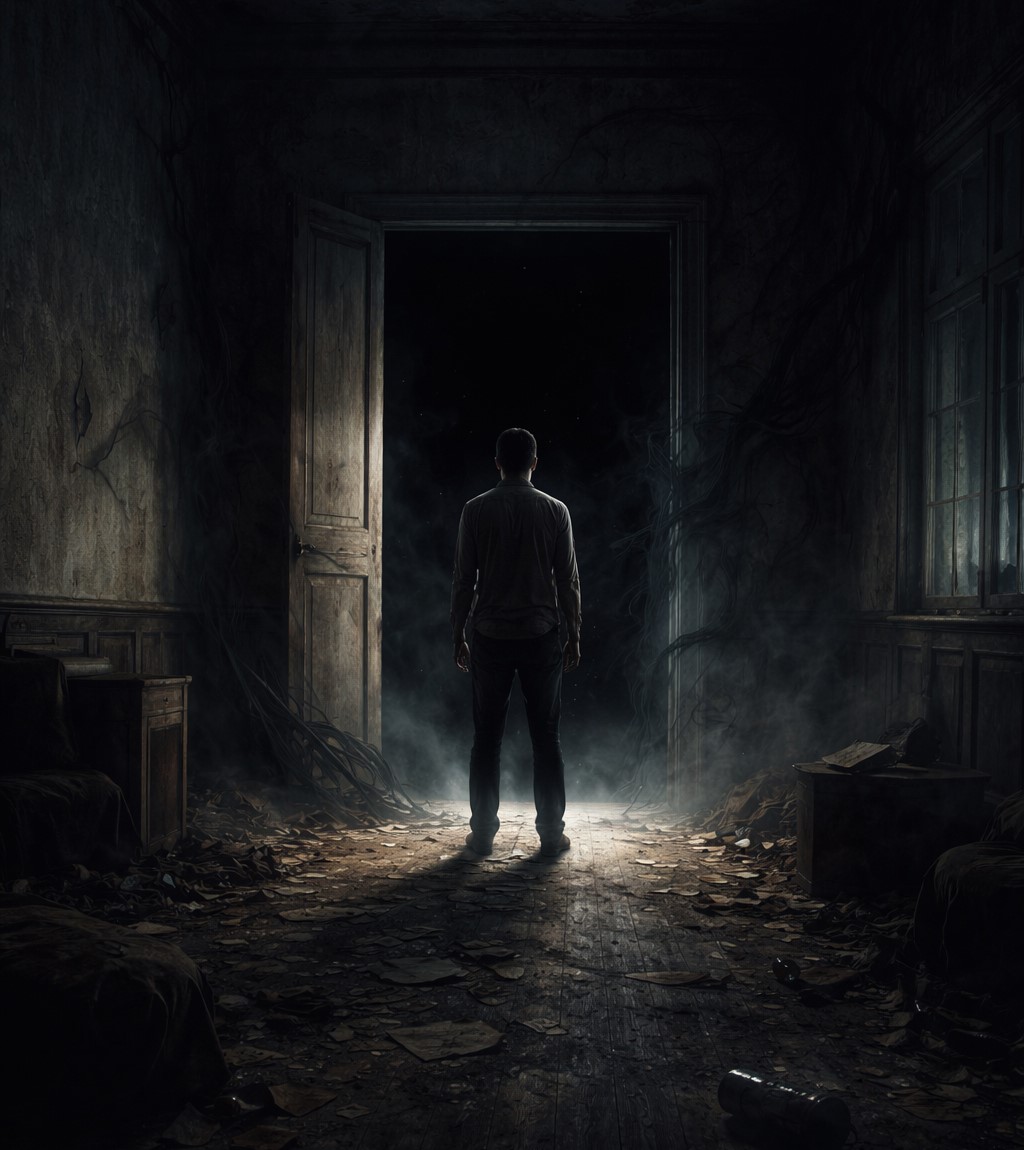
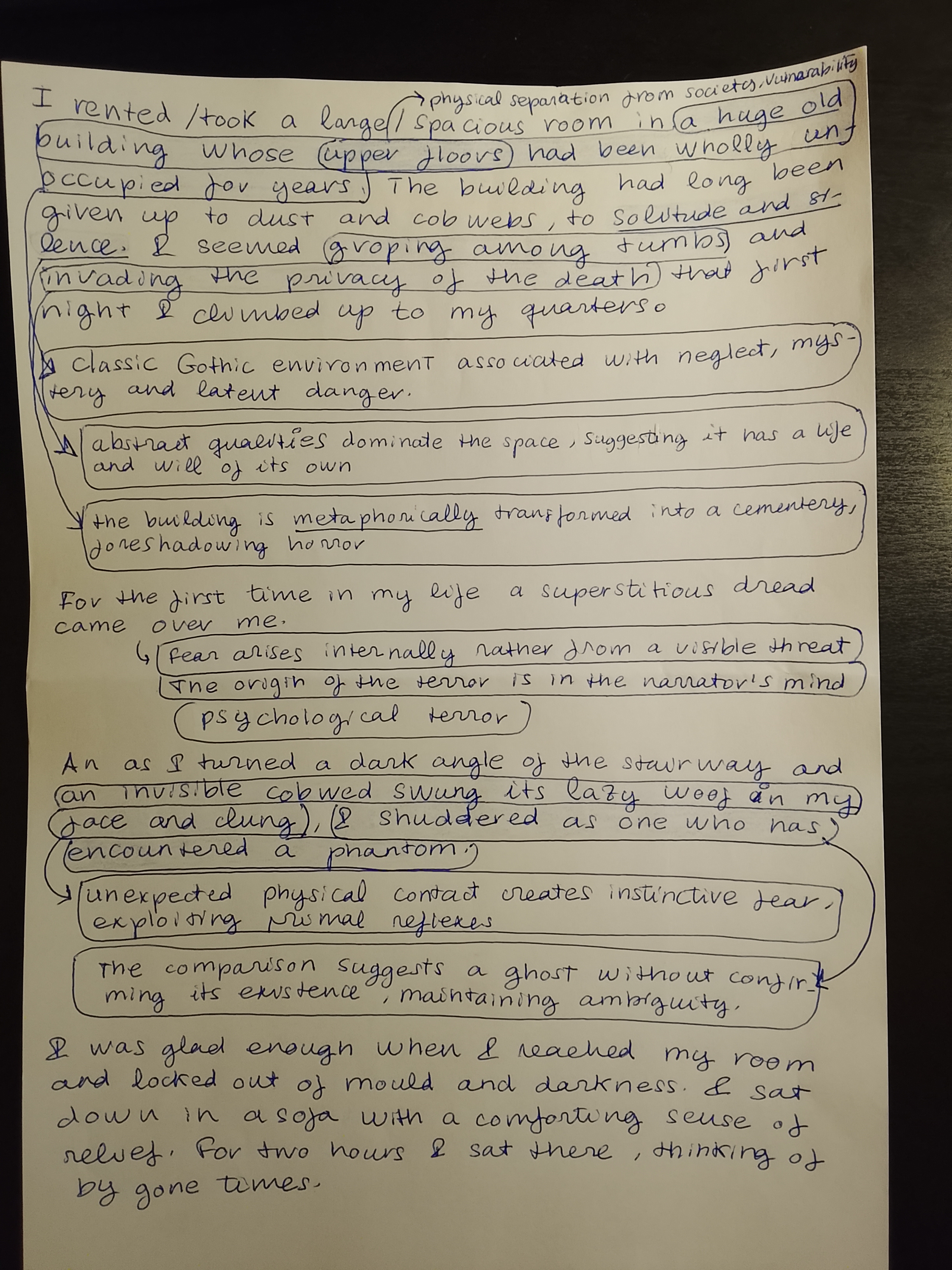
I took a large room, far up, in a huge old building whose upper stories had been wholly unoccupied for years. Until I came. The place had long been given up to dust and cobwebs, to solitude and silence. I seemed to be groping among the tombs and invading the privacy of the dead that first night I climbed to my quarters. For the first time in my life, a superstitious dread came over me. And as I turned a dark angle of the stairway and an invisible cobweb swung its lazy woof in my face and clung, I shuddered as one who had encountered a phantom.
I was glad enough when I reached my room and locked out the mould and darkness. I sat down in a sofa before the tv with a comforting sense of relief. For two hours I sat here, thinking about by gone times, recalling and summoning half-forgotten faces out of the mists of the past. And as my reverie softened down to a sadder and sadder pathos, the shrieking of the wind outside softened to a wail, the angry beating of the rain against the panes diminished to a tranquil patter, and one by one the noises of the street subsided, until the hurrying footsteps of the last belated straggler died away in the distance and left no sound behind.
It was then that something subtle began to change. The memories I had summoned no longer obeyed me. Faces I loved lost their warmth; moments of kindness curdled into shame. Qualities I had once believed to be virtues—patience, loyalty, restraint—were quietly rewritten as weakness. I felt it working not upon the room, but upon me, as if an unseen hand were rearranging the furniture of my mind.
I rose and began to move carefully about the room, performing small, necessary tasks with exaggerated caution, as though I were surrounded by sleepers whose awakening would be disastrous. Every sound I made seemed amplified. Every breath felt borrowed.
I resisted. I stood, spoke aloud my own name, listed my achievements, my decencies, my small acts of goodness. The air thickened. The walls leaned inward. I saw it then: an abyss not beneath the house, but within myself, carefully excavated over years of silence.
The force wanted me empty—stripped of value, easy to keep.
I stepped closer to that inner edge and did the one thing it could not predict. I accepted the darkness without surrendering to it. I named my flaws and kept my virtues intact. The building groaned, offended, as if rejecting a foreign body.
But at dawn, I understood the truth too late: the abyss had not vanished, it had merely learned patience. As light crept across the walls, I felt my virtues loosening, slipping from me like names forgotten in a dream. The building exhaled, satisfied. When I tried to leave, the door opened onto nothing but darkness, and in that darkness I sensed myself being carefully unmade—not killed, but erased—until even fear deserted me, and the room, at last, stood empty again.
Bonus 1
Bonus 2
This story uses several classic Stephen King–style horror techniques:
Slow-burn atmosphere
Horror is built gradually through setting and mood rather than immediate action. The abandoned building, silence, dust, and height create unease long before anything supernatural occurs.
Psychological horror
Fear originates in the narrator’s mind—loneliness, nostalgia, and memory soften his defenses. King often uses emotional vulnerability to make terror more believable.
Personification of silence
Silence is given physical qualities (“It had weight. It pressed against my ears”), transforming absence into a threatening presence.
Domestic safety violated
Objects associated with comfort (the sofa, TV, private room) fail. The TV turning black symbolizes the collapse of normalcy, a common King motif.
Ambiguity
The fear comes from suggestion rather than explanation, allowing the reader’s imagination to do the work.
Isolation
The character is cut off physically (upper floors, abandoned building) and socially (empty streets), intensifying helplessness.
 @Yolanda Muriel


