I was utterly amazed. Seldom do you encounter a voice so pure, so instinctively expressive and emotionally captivating. Like millions of others, I had always been aware of Amy Winehouse’s extraordinary talent; needless to say, her music had already secured her place in contemporary culture. But not until watching Asif Kapadia’s Amy does the true extent of her tragedy fully come into focus. Her meteoric rise to fame and her devastating downfall are not presented as isolated events, but as two sides of the same fragile, unprotected trajectory.
Emerging from this documentary is the portrait of a gifted performer of rare authenticity—emotionally open, creatively fearless, and profoundly vulnerable. Kapadia reveals an artist whose voice was not merely a technical instrument but a direct extension of her inner world. Amy sang exactly what she felt, without filters or protective layers, and that radical honesty became both her greatest strength and her most dangerous exposure. The film makes painfully clear that she was repeatedly failed by those who should have shielded her: managers, industry figures, and even the media ecosystem that fed on her pain. Had they tried harder—had they prioritised care over profit—perhaps Amy would still be around today.
One of the documentary’s most powerful contributions is the way it frames Amy’s image as a manifestation of truth rather than construction. Her visual identity—the beehive hair, the heavy eyeliner, the unapologetically retro aesthetic—was not a calculated branding exercise, but a form of self-expression rooted in musical heritage and personal coherence. Her image projected authenticity because it was inseparable from her voice and her songwriting; it was not designed to conceal, but to reveal. In Amy, we see how this refusal to perform a persona, how her insistence on showing her “real true”, made her magnetic and unique, but also left her dangerously exposed in an industry ill-equipped—or unwilling—to protect someone so transparently human.
Ultimately, Amy is not just a documentary about fame or addiction; it is a study of authenticity in a system that punishes it. What made Amy Winehouse unique was not only her talent, but the coherence between who she was, what she sang, and how she appeared in the world. Kapadia’s film leaves us with a lasting and uncomfortable question:
What happens when absolute honesty enters a system where mediocrity is protected, and authentic talent is perceived as a threat rather than a gift?
What happens when radical honesty confronts a system built to normalise the average and neutralise those who stand out?
What happens when absolute honesty collides with a system that rewards conformity and feels threatened by genuine difference?
The answer, tragically, is written in Amy’s story.
Mediocrity rarely attacks openly; it survives by slowly devouring what it does not understand.
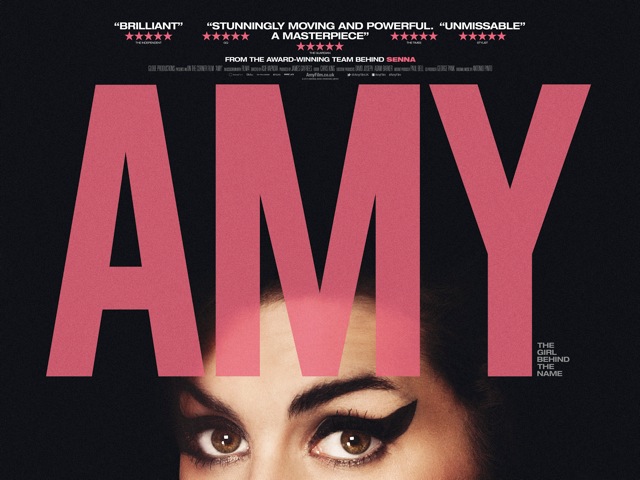
©Image. https://louderthanwar.com/
 @Yolanda Muriel


