Big cities are running out of space, and housing is becoming increasingly expensive. For many people, having a compact home can make the difference between being able to afford a place to live or not. But what if the small size of a home, rather than being just a limitation, could become the starting point for an innovative solution?
An interesting source of inspiration comes from the traditional homes of the Dolgan, an indigenous people living in northern Siberia, Russia. Their way of life is closely connected to reindeer herding, which requires them to move across the tundra in search of new grazing grounds. Their traditional portable dwellings, known as baloks, are compact wooden structures built on sled runners and covered with reindeer skins, which provide insulation against the extreme cold. Inside, the space is basic and functional, generally accommodating a few beds, a table and a stove.
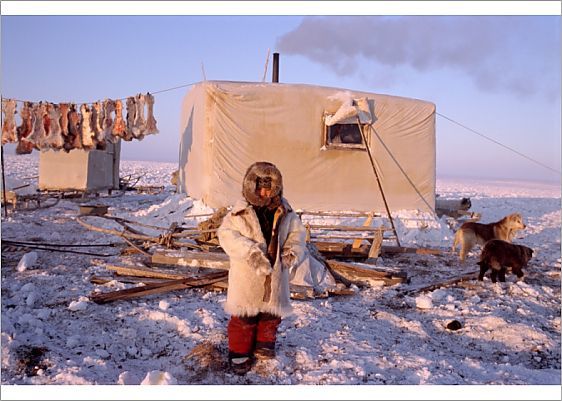
A young Dolgan boy stands outside his family’s balok (wooden hut built on sled runners) on the tundra.
© Image: https://www.rferl.org/a/russia-siberia-krasnoyarsk-taymyr-dolgan-nomad-reindeer/28316027.html

© Image: https://www.mzunguexpeditions.com/ Reindeers moving the house.
The remarkable feature is that these homes can be transported along with their inhabitants. When the Dolgan need to move their reindeer to find new grazing areas, they can take their homes with them, traditionally using reindeer to pull them. In this case, a small and simple dwelling solves a problem that a conventional, permanent house could not that is providing shelter while allowing an entire household to move with its way of life.

© Image: https://tripsider.com/ A Dolgan dwelling.
A very different approach to compact living can be found in the work of Hong Kong architect Gary Chang. A small apartment, 24 different ways of living.
In Hong Kong, architect Gary Chang transformed his 32-square-metre apartment into a flexible living environment capable of adapting to multiple needs. Through movable walls and sliding elements, a single space can become a bedroom, kitchen, living room, library or home cinema. This project challenges conventional ideas about domestic space and demonstrates how rethinking what we already have can lead to surprisingly innovative solutions.
But how does this transformation actually work? The following video takes us inside Gary Chang’s apartment, showing how movable walls, sliding panels and cleverly designed furniture allow the same small space to become 24 different living environments.

© Image. https://www.homedsgn.com/2011/05/07/a-tiny-apartment-in-hong-kong-transforms-into-24-rooms/
Domestic Transformer, his own 32-square-metre apartment, is an example of how a very limited living space can be transformed to accommodate a wide range of everyday activities.
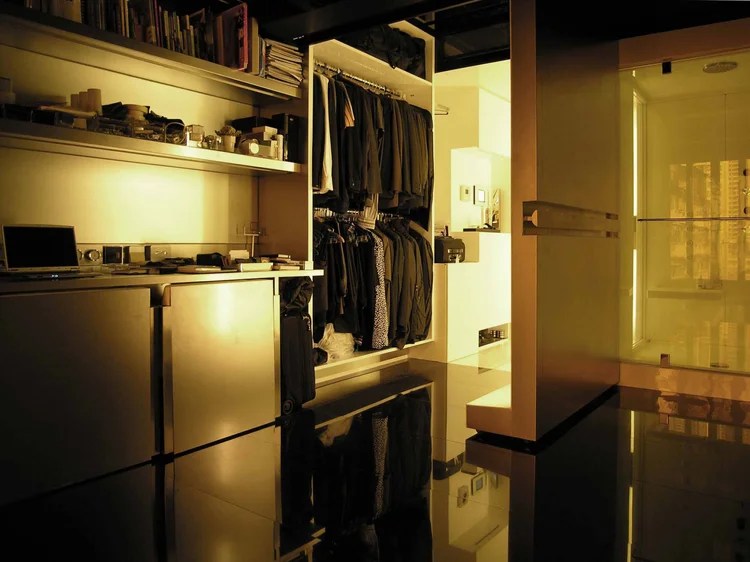
© Image. https://www.edgedesign.com.hk/2007domestictransformer
Rather than accepting the conventional idea that every activity requires a separate room, Chang designed a system of sliding walls and movable elements that allows the apartment to change its configuration. Depending on how these elements are arranged, the same space can become a bedroom, a kitchen, a living room, a library or even a home cinema. The design offers up to 24 different configurations. Instead of increasing the available floor area, Chang rethinks how that area can be used. The apartment does not need to become bigger to accommodate different functions, only it needs to be designed differently.

© Image. https://www.homedsgn.com/2011/05/07/a-tiny-apartment-in-hong-kong-transforms-into-24-rooms/ Floor plan
Chang has been living in this apartment since he was 14 years old. After his parents move out, he tried a series of modifications. Different floors of the apartment with different options.

Floor plan 1989. © Floor apartment Image. https://www.homedsgn.com/2011/05/07/a-tiny-apartment-in-hong-kong-transforms-into-24-rooms/

Floor plan 1987. © Floor apartment Image. https://www.homedsgn.com/2011/05/07/a-tiny-apartment-in-hong-kong-transforms-into-24-rooms/

Floor plan 1998. © Floor apartment Image. https://www.homedsgn.com/2011/05/07/a-tiny-apartment-in-hong-kong-transforms-into-24-rooms/
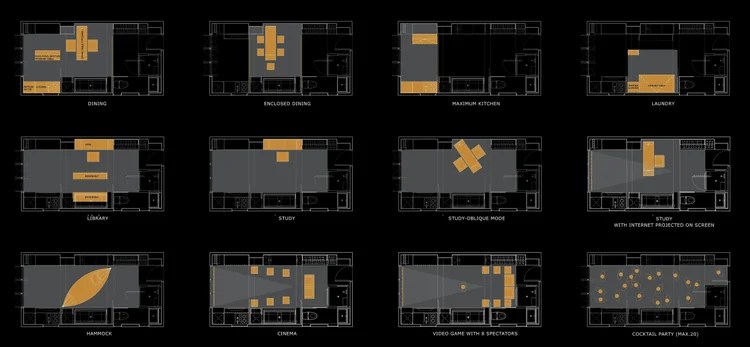
© Image. https://www.edgedesign.com.hk/2007domestictransformer
The two examples are very different, but they share an interesting principle. The Dolgan need a tiny home that can move with them, while Gary Chang needs a small apartment to accommodate multiple activities. In both cases, the conventional solution is insufficient to meet the need. And this is where the real innovation lies as small things may seem insufficient when we try to use them according to the rules of conventional solutions. However, when we change the way we conceive and use them, they can become the basis for a solution that makes something previously impractical or insufficient perfectly functional.
We often underestimate the potential of what is small, assuming that limited space or resources necessarily mean limited possibilities. Yet these examples show that the problem is not always the size of what we have, but the way we think about using it. Perhaps this is an important lesson for innovation in general. When faced with a problem, our first reaction is often to look for more as more space, more resources or greater capacity. But sometimes the breakthrough comes from rethinking what we already have and finding a different way to make it work.
The challenge is not always to make things bigger, but to discover what small things can make possible.
References
- Radio Free Europe / Radio Liberty (2017). The Reindeer Herders. Report on the Dolgan community and reindeer herding in northern Siberia.
https://www.rferl.org/a/russia-siberia-krasnoyarsk-taymyr-dolgan-nomad-reindeer/28316027.html - EDGE Design Institute. Domestic Transformer (2007). Official project description by architect Gary Chang.
https://www.edgedesign.com.hk/2007domestictransformer - ArchDaily (2020). Nano-Scale: Gary Chang Explores Compact Living and The Future of Dense Cities. Interview with Gary Chang about his approach to compact living and the Domestic Transformer.
https://www.archdaily.com/949150/nano-scale-gary-chang-explores-compact-living-and-the-future-of-dense-cities
Aditional references
1. YouTube – Extreme Transformer Home in Hong Kong: Gary Chang’s 24 Rooms in 1.
https://youtu.be/WB2-2j9e4co
2. Kyoto Global Design Awards – Interview with Gary Chang: “The Point Is to Squeeze the Space and Squeeze the Time”.
3. PMQ – Maximising Micro Living: Gary Chang
https://www.pmq.org.hk/designfeature/maximising-micro-living/
4. Hong Kong Design Centre – A Domestic Transformer.
https://www.designspectrum.hk/project/a-domestic-transformer/
5. Turaev, V., Sulyandziga, R., Sulyandziga, P. & Bocharnikov, V. (2011). Encyclopedia of Indigenous Peoples of the North, Siberia and the Far East of the Russian Federation.
Haz clic para acceder a 2011-1.pdf
6. Usenyuk, S., Dudeck, S. & Garin, N. (2015). “The Making of a Home in a Changing Northern Context: An Ethnographic Account of Contemporary Housing Practices among Russian Reindeer Nomads.”
7. Femenias, P. & Geromel, F. (2020). “Adaptable Housing? A Quantitative Study of Contemporary Apartment Layouts That Have Been Rearranged by End-Users.”
https://link.springer.com/article/10.1007/s10901-019-09693-9
9. Compact Housing – Compact Homes and Small-Scale Living.
https://compact-housing.com/
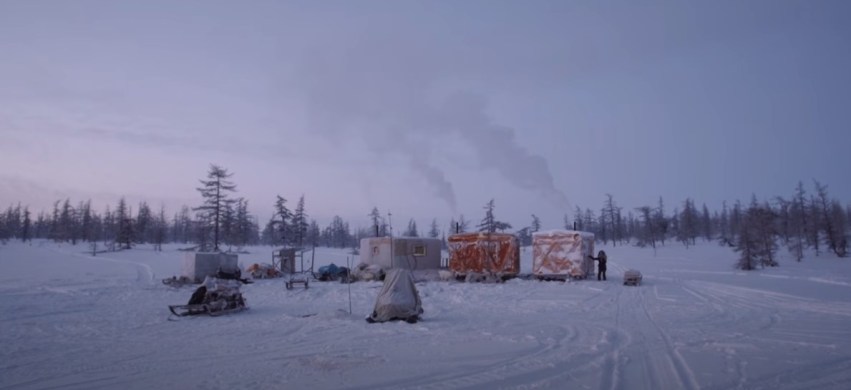
The Dolgan Houses.
© image: https://www.rferl.org/a/russia-siberia-krasnoyarsk-taymyr-dolgan-nomad-reindeer/28316027.html

The house pulled by the reindeers
© image: https://www.rferl.org/a/russia-siberia-krasnoyarsk-taymyr-dolgan-nomad-reindeer/28316027.html
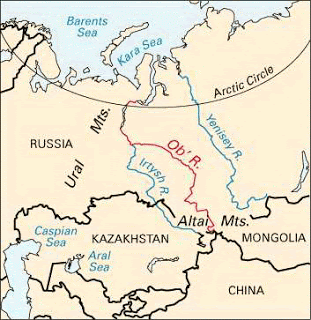
Northern Siberia, Russia
© image: https://www.rferl.org/a/russia-siberia-krasnoyarsk-taymyr-dolgan-nomad-reindeer/28316027.html
 Contenido Web de Yolanda Muriel está sujeto bajo Licencia Creative Commons Atribución-NoComercial-SinDerivadas 3.0 Unported.


