Artificial Intelligence is advancing at extraordinary speed. But beyond the technology itself, an increasingly important question is emerging: How can AI create meaningful and lasting social impact?
This question is the starting point of this interview series.
Rather than beginning with a predefined answer, I decided to ask people working at the intersection of Artificial Intelligence, research, education, open source and technological innovation what they believe the most important opportunities are. For this reason, I am launching a series of written expert interviews. The first stage consists of three common questions that I will ask researchers, educators, practitioners and community leaders working in AI.
My long-term goal is to build a collection of conversations with people shaping the future of AI for Social Good. Once I have analysed the first written interviews, I hope to invite a small number of contributors to short online conversations exploring some of the emerging themes in greater depth.
For this first conversation, I am particularly pleased to introduce Qigang Zhu, Beijing Academy of Artificial Intelligence (BAAI). China.
Qigang has worked in the IT field since 1999, with a particular focus over the past 13 years on Open Source, including Open Source Hardware, Software and Education. His experience includes working with the OpenHarmony ecosystem, contributing to the development of an open source foundation in China, and, more recently, working on FlagOS, an Open Compute initiative focused on building an open AI compute infrastructure.
His perspective therefore brings together two themes that I believe are particularly important when thinking about AI for Social Good: the democratization of technology and the role of Open Source in making AI more accessible.
In his answers, Qigang describes AI as a rare opportunity to pursue greater knowledge equality, while warning that the technology could also concentrate enormous wealth and power if its benefits remain accessible only to a small number of actors.
He also raises a question that goes beyond technology: whether AI can contribute to more rational, transparent and efficient forms of social governance.
For someone beginning to explore AI for Social Good, his recommendation is strikingly concrete: before asking what AI can do for society, we should consider who has the opportunity to access and use AI in the first place.
I invite you to read his perspective below.
About the interviewee
Qigang Zhu
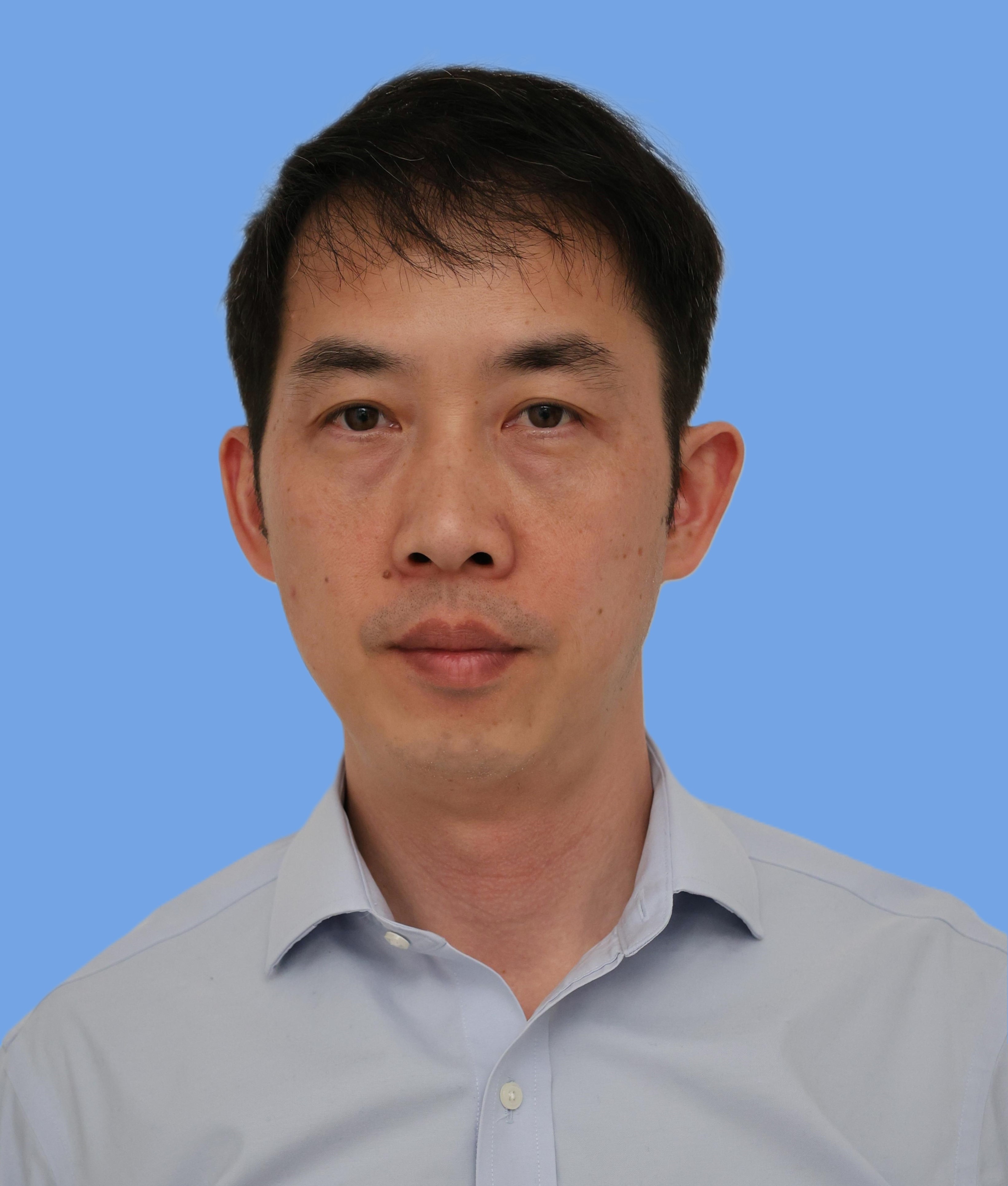
©image. Qigang Zhu
Beijing Academy of Artificial Intelligence (BAAI)
Open Source & Open Compute advocate
Secretary‑General, Shanghai Open Source Information Technology Association; Deputy Director, Global Open Source Collaboration Research Center, University of International Business and Economics; Executive Committee Member, Open Source Development Committee, China Computer Federation. Research areas include open source economics, open source operations, and open source innovation.
Three questions on AI for Social Good
1. In your opinion, what is currently the greatest missed opportunity for Artificial Intelligence to create meaningful social impact?
[Qigang Zhu’s answer]
AI is a rare opportunity in human history to achieve knowledge equality. There are two sides to a coin. AI can be controlled by a few people to control huge wealth, or it can be used to maximize technological democratization, manifested in mastering knowledge, innovating and creating, or enjoying better social governance (using AI to correct fundamental flaws in humans and society).
2. When you evaluate a potential AI for Social Good project, what makes you think: «This idea is worth pursuing»?
[Qigang Zhu’s answer]
The thinking about civilization from the East has always been about how to transcend human nature and create a more harmonious society. For example, the altruistic spirit in Confucianism and Buddhism, the definition of a gentleman in Confucianism, and the pursuit of higher human nature.
Open Source makes AI a possible way to deliver this value through technology.
3. If you could recommend one research direction or challenge to someone who wants to develop an original AI for Social Good initiative over the next year, what would it be?
[Qigang Zhu’s answer]
I think open compute for AI is the first step, every one can have same chance to touch and experience, utilize AI. otherwise, Africa, even Europe will find it become difficult to catch up China and US.
And then, we can try to use AI to join the social governance to enhance rationality, transparency, and efficiency.
Further Reading: Further Resources Shared by the Interviewee
For readers interested in exploring the ideas discussed in this interview in greater depth, Qigang Zhu has shared the following publication:
The article examines the development and potential of Open Source in China, looking beyond software to a broader model of collaborative innovation. It discusses how Open Source can contribute to technological democratization, knowledge sharing and the development of new innovation ecosystems.
This perspective provides an interesting complement to Qigang Zhu’s answers in this interview, particularly his view that Open Source can help make AI more accessible and create greater equality in access to knowledge and technology.
Open Source in China: Opportunities in the New Era
Zhu Qigang, Zhang Guofeng, Zhu Caihua, Zhang Yi. Open source in China: Opportunities in the new era. *Bulletin of Chinese Academy of Sciences*, 2025, 40(3): 441-445, doi: 10.16418/j.issn.1000-3045.20250225006. (in Chinese)
Authors:ZHU Qigang¹, ZHANG Guofeng², ZHU Caihua¹, ZHANG Yi³
1 Global Open Source Collaboration Research Center, University of International Business and Economics, Beijing 100105, China
2 Institute of Open Source Innovation and Digital Governance, Shanghai University of International Business and Economics, Shanghai 200336, China
3 School of Management, Guangdong Ocean University, Zhanjiang 524000, China
Abstract
China has rapidly experienced industrialization and informatization, entering the era of digital economy. The combination of new productive forces represented by artificial intelligence, non‑exclusive production factors represented by knowledge, and open‑source related relationships may form a new model. From the perspective of social practices of open source innovation, open source lacks systematic preparedness at theoretical, institutional, and talent levels. China should seize the historical opportunity to complete theoretical updates and cultural reconstruction that are adapted to it. Open source and openness also have conditions for China to create a global paradigm of cooperation, sharing, and innovation in the digital economy. This study systematically explores the path of integration and innovation in China’s economic and cultural development characterized by open source from four aspects: theoretical construction, cultural integration, international cooperation, and national innovation system.
Keywords: open source, digital economy, international cooperation, innovation system, knowledge sharing, cultural reconstruction
Other Resources
For readers interested in exploring Qigang Zhu’s current work further, one of the projects he refers to in this interview is FlagOS, an open-source AI system software stack designed to work across different AI chips and hardware platforms.
FlagOS follows the principle of developing AI systems once and enabling them to run across different hardware environments, with the aim of reducing the barriers created by fragmented AI computing ecosystems. Its open-source ecosystem includes tools and components for model training, inference, compilation, communication and hardware evaluation.
This is particularly relevant to Qigang’s view that open compute for AI is a first step towards giving more people the opportunity to access and use AI.
Explore FlagOS: FlagOS official website
English documentation: FlagOS Documentation
Open-source repositories: FlagOS on GitHub
FlagOS is therefore an interesting example of how the idea of AI for Good can also be approached at the infrastructure level: not only asking what AI can do for society, but also considering who can access the computing infrastructure needed to build and use it.

 @Yolanda Muriel

 yolandamuriel.com