In 1968, Springsteen could not afford a new guitar. A friend gave him an old Gibson six-string bass. He restrung it with guitar strings and plugged it into his amplifier. The result was an unusual, thick psychedelic sound that nobody else in New Jersey was producing. Rather than waiting until he could afford the right equipment, he experimented with what was available. The limitation became part of his distinctive sound.
Springsteen realised that there were musicians who were technically better than him. During his visits to California, he discovered a more sophisticated level of musicianship than he had encountered at home. Instead of pretending to be the best at everything, he recognised that he would have to develop his own strengths. So in Asbury Park, his stagecraft, singing and ability to lead a performance gave him an advantage over musicians who might have had better technique. You don’t always have to outperform your competitors at what they do best. Sometimes, the smarter strategy is to identify what makes you different and build your success around it. Springsteen realised that he might not be the best guitarist in the room, but he could offer something others couldn’t as a powerful stage presence, a distinctive voice and the ability to connect with an audience.
Springsteen and his fellow musicians understood that New Jersey was too small a market for their ambitions. They traveled to New York’s Greenwich Village, where they played without being paid, simply to gain access to a different musical environment.They discovered that many of the bands there were better than they were. The experience was valuable precisely because it exposed the limitations of their existing abilities. Sometimes entering a more demanding market is not immediately profitable, but it reveals what you need to become.
Springsteen wanted to be a voice reflecting the experiences and world of ordinary Americans who were often forgotten in popular music. His songs gradually developed a distinctive identity and attracted an audience that could recognize itself in his work. He was not simply selling music, he was creating a connection between his artistic vision and the experiences of his listeners.
One of the most revealing passages concerns the financial reality behind his success. Even after signing with Columbia Records and selling millions of records, Springsteen remained broke for years. Touring expenses, creditors, sound companies, transport and enormous studio bills consumed the band’s modest earnings. The business was generating activity and visibility, but not necessarily enough financial security. It is a reminder that revenue, reputation and profitability are three different things.
Springsteen describes the making of The River as a process that was both extremely disciplined and indulgent. He wanted the record to sound not too polished, but right. The process was financially and emotionally exhausting, yet he ultimately believed they had achieved the sound they wanted. This raises an interesting question about creative businesses that is how much refinement actually adds value, and when does the pursuit of perfection become a cost that threatens the project itself?
Springsteen’s story shows that building something original is not simply about having talent, ambition or a good idea. It is about turning limitations into a distinctive identity, recognizing when the world is telling you that you need to evolve, and having the discipline to develop your craft until your vision becomes real. It also reveals a less obvious truth that is creative success and financial success do not necessarily arrive together. You may build an audience, sell millions of records and still struggle to make a living. What ultimately makes the difference is the ability to combine artistic conviction with ownership, collective commitment and an understanding of the economic reality behind the work. The real achievement is not just creating something people recognize, but building something distinctive enough to matter and resilient enough to survive.
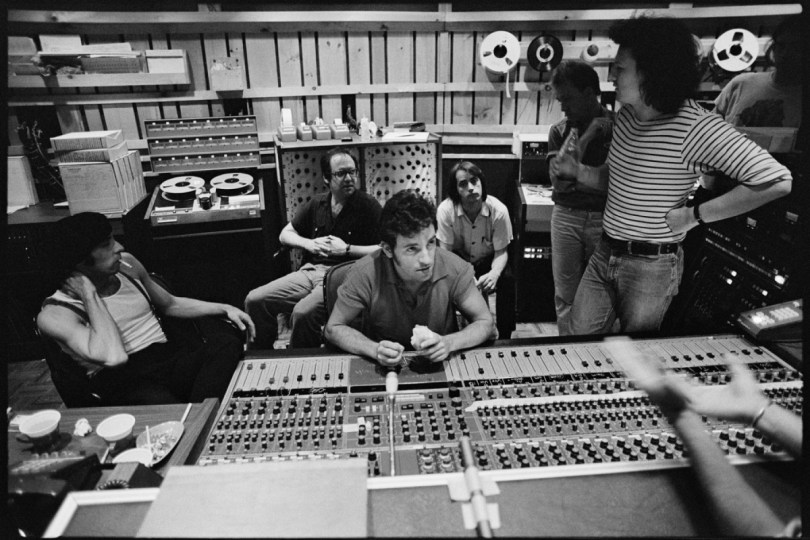
© Bruce Springsteen, Recording The River album, The Power Station, NYC, 1979. Photo by Joel Bernstein
Image: www.bostonglobe.com/arts/music/
 Contenido Web de Yolanda Muriel está sujeto bajo Licencia Creative Commons Atribución-NoComercial-SinDerivadas 3.0 Unported.


