«If you wrestle with monsters, take care you don’t become a monster yourself. Keep staring into the abyss and the abyss will stare right back into you».
(Friedrich Nietzsche. Beyond Good and Evil: Prelude to a Philosophy of the Future).
© Image. Series «MR. ROBOT». Director: Sam Esmail.
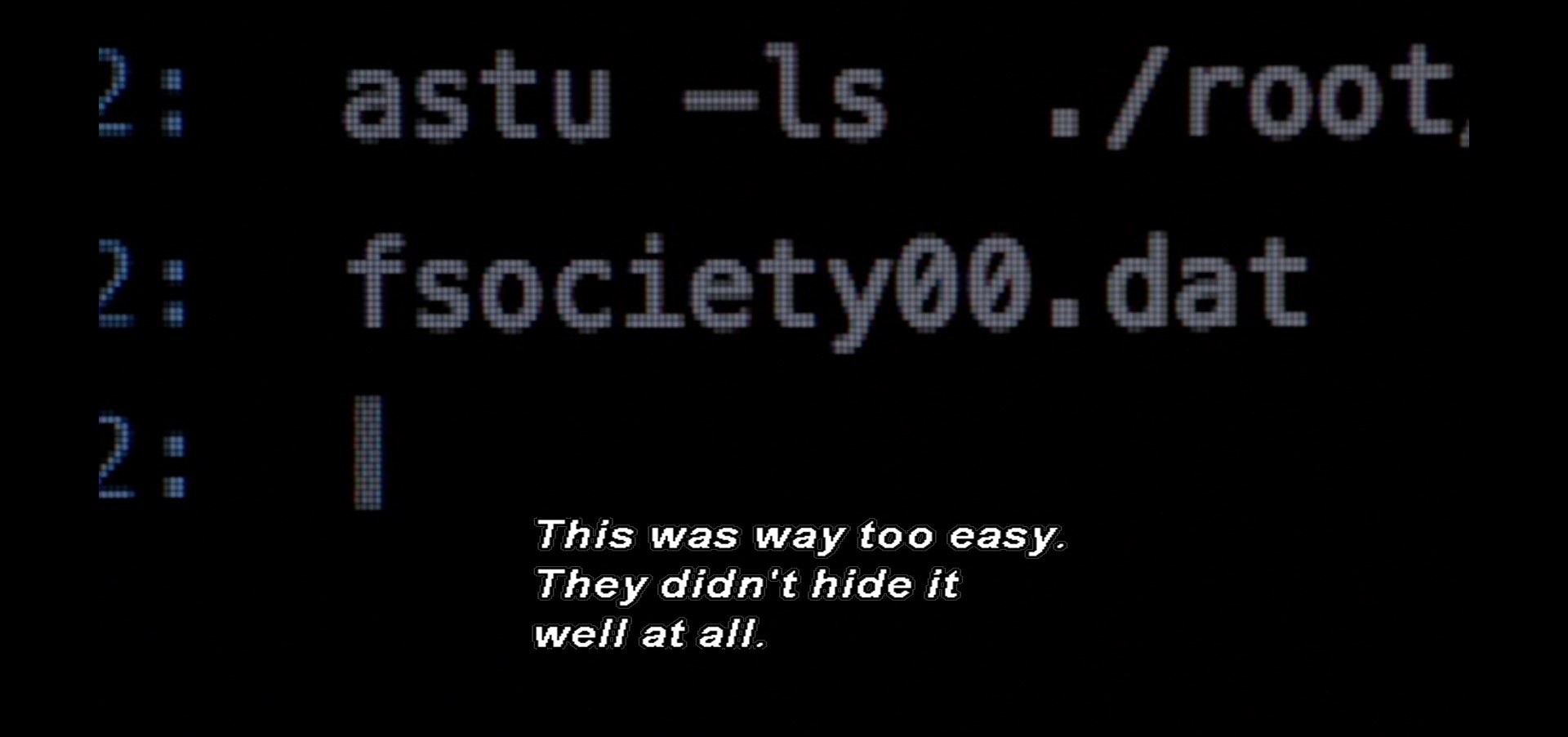
THE ILLUSION OF CHANGING THE WORLD
According to the book «MR.ROBOT and philosophy. Beyond good and evil corp«, our intentions don’t drive us. Indeed, our higher goals and our higher self does not is the cause of what we do. Nevertheless, there are a group of people who are running the world behind the scenes. They set the world’s rules and regulations which ban all kind of action that break these laws. This group are the top one percent who are at the helm of the multi-national conglomerate, and who hold a large number of people get into debt which is the metaphor of the modern slavery. This colonial world prompt characters to think about rebellion.
And according to Elliot and fsociety, all hackers, what this top group of people is doing is totally undemocratic. In other words, the anger rouse Elliot and fsociety into doing something. So the book suggests that oppressed class should join forces and undertake crucial actions to address the problem changing the unfair world.
The 5/9 hack done by Elliot and fsociety should legitimize the freedom of the slaved people, compelling the top one percent to submit to these oppressed people. In other words, people should take the steps need to reverse the power system. Indeed, the aim of Elliot 5/9 hack attack is to destroy all the records of debt in the world and, thus, to prevent E Corp keep people in the dark rebelling what is behind the scenes. But this hack attack wreak havoc in the world as a metaphorical sense of a war, damaging the people who they want to save because of the lack of financial flows. Would it ultimately prove to be the thin end of the wedge or pave the way for a better future?
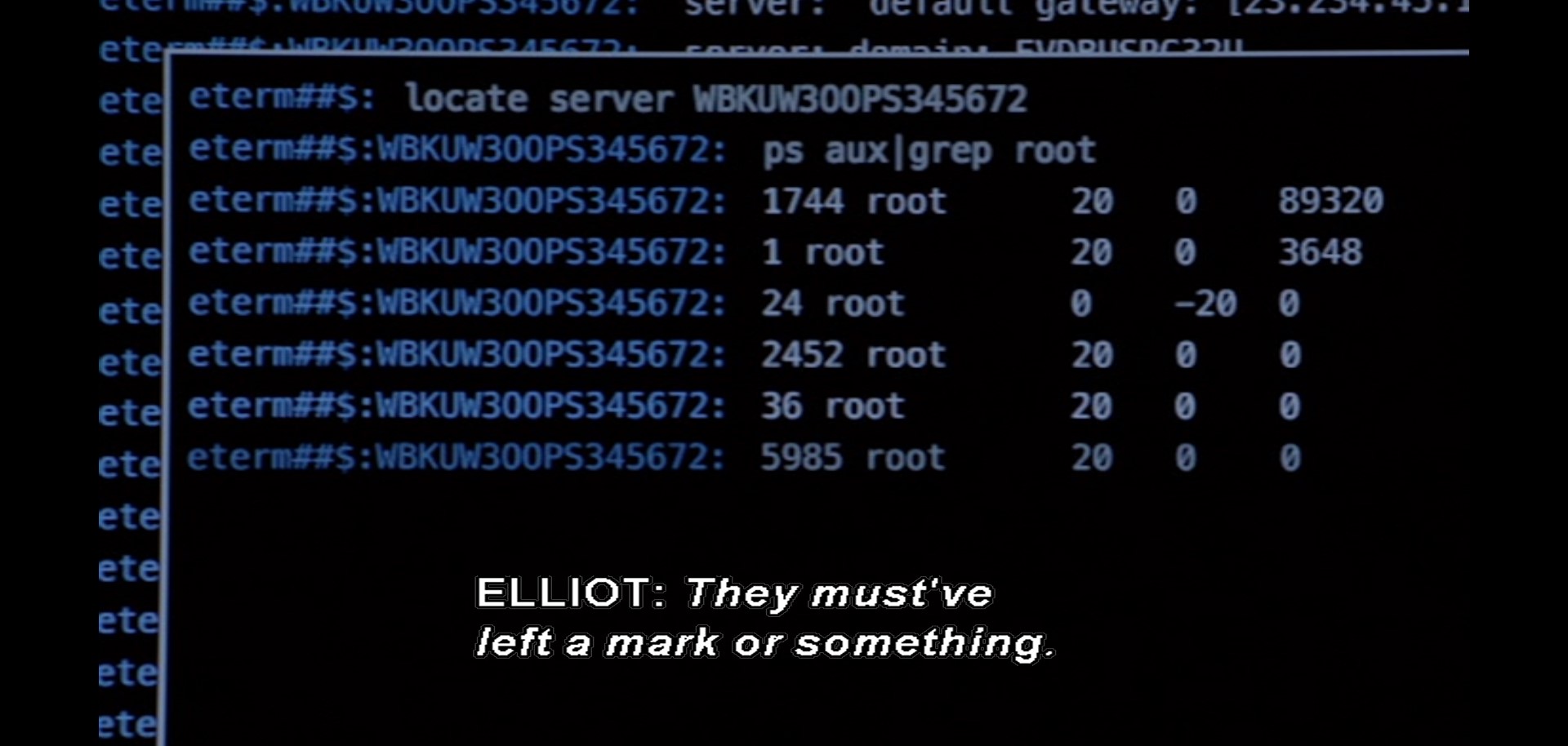
© Image. Series «MR. ROBOT». Director: Sam Esmail.
This book explores all of philosophical themes that can be found in the American drama thriller television series Mr. Robot.
In 2015, a young man living in New York City, who works at the cybersecurity company Allsafe as a cybersecurity engineer is recruited by Mr. Robot and joins his team of hacktivists known as fsociety. One of their missions is to cancel all consumer debt by encrypting all the data of one of the largest corporations in the world, E Corp which also happens to be Allsafe’s biggest.
A WORLD BUILT ON FANTASY
At the end of Season 1 of the series «MR.ROBOT», Mr. Robot delivers a monologue that challenges the idea that we live in a free and autonomous society. He describes a world built on fantasy, in which emotions are manufactured through medication, behavior is influenced by advertising, food and chemicals affect our minds, and the media and social networks create controlled environments in which people remain isolated.
This raises a fundamental question:
- How have people been tossed into this slumber from which they need to wake up? Why is the human condition a dumpster?
Mr. Robot elaborates on the content of that slumber in a stirring monologue at the end of Season 1.0. We live in:
«A world built on fantasy. Synthetic emotions in the form of pills. Psychological warfare in the form of advertising. Mind-altering chemicals in the form of … food! Brainwashing seminars in the form of media. Controlled isolated bubbles in the form of social networks. Real? You want to talk about reality? We haven’t lived in anything remotely close to it since the turn of the century. We turned it off, took out the batteries, snacked on a bag of GMOs while we tossed the remnants in the ever-expanding dumpster of the human condition. We live in branded houses trademarked by corporations, hypnotizing us into the biggest slumber mankind has ever seen.»
If you look at the language of Mr. Robot’s monologue it becomes clear. As far as I can tell, the point is that unchecked capitalism ultimately encourages companies to hack people, to tap into their addictions so that they keep buying products. This is how they profit from enslavement.
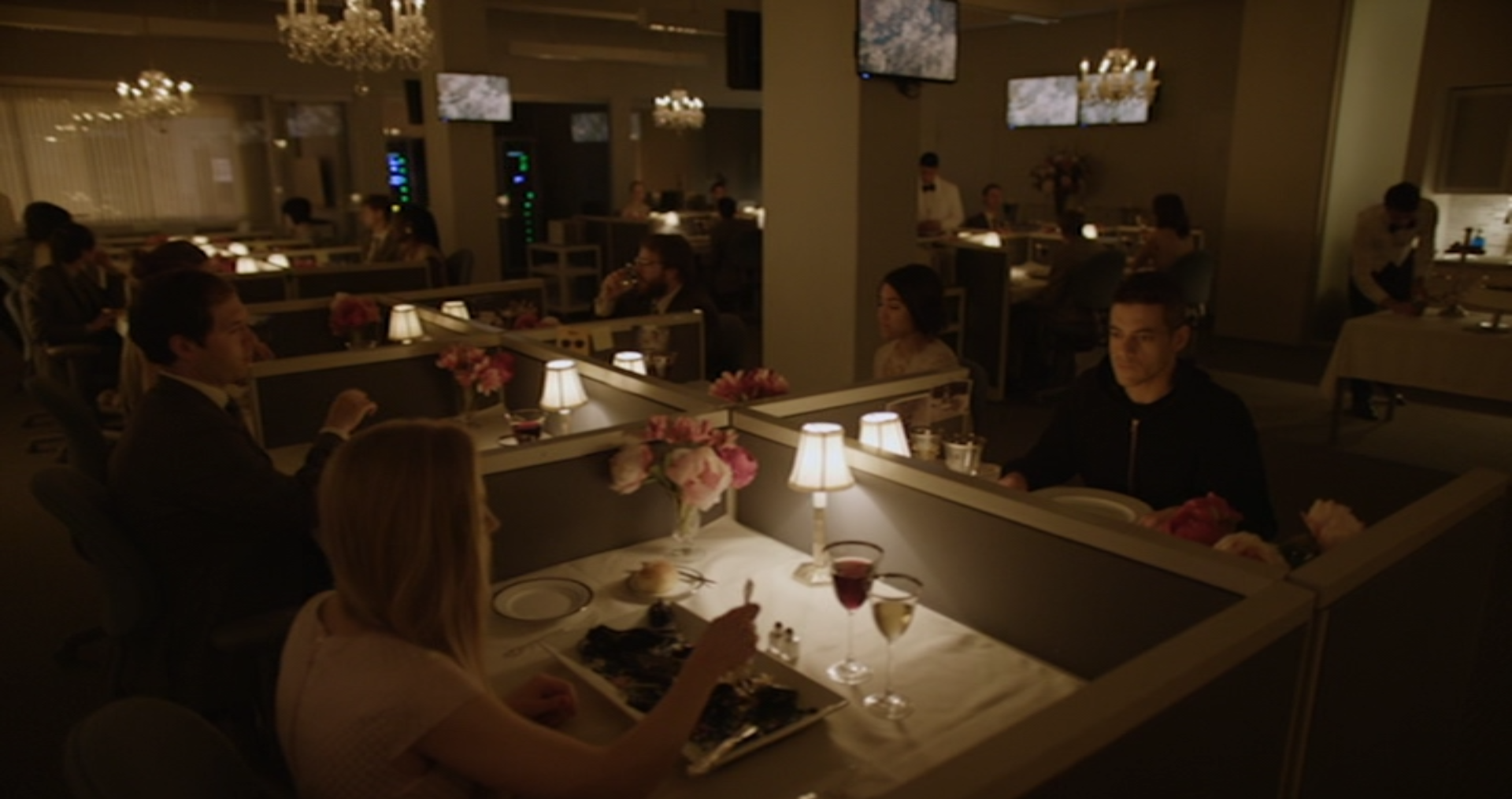
2. Clickbait for black fish. There is a scene where Eliot is back in his office, which has been turned into a restaurant. The black fish is being served. Everyone is eating this fish but Elliot. If you look at the location, the black fish dinner is placed where computers normally are. Elliot, however, does not eat the fish. He eats Pop’s Pie. Why?
Is a high metaphorical dream sequence in which everyone, except for Elliot, is dining on a black fish.
© Image. Series «MR. ROBOT». Director: Sam Esmail.
THE REVERSE CONTRACT: HACKING HUMAN WEAKNESSES
According to Rousseau the freedom is achievable, at least partially, through contracts. We set up, a contract which we might achieve our higher goals and behave in accordance with our true selves rather than our lower selves. To reverse the contract is to use someone’s lower self against. Elliot uses the analogy of hacking people to describe this process of reverse. He identifies different kinds of vices people are chained to and he describes them as security flaws. Given these weaknesses or security flaws, Elliot says, “Hack the right person, people make the best malware. It’s never hard to exploit most people”. This is not a normal definition of exploitation. This is exploitation from within. Elliot thinks that you can control people by enlarging the force and scope of their lower desires, by manipulating them through their own greed. Like a computer you can hack somebody from within their system.
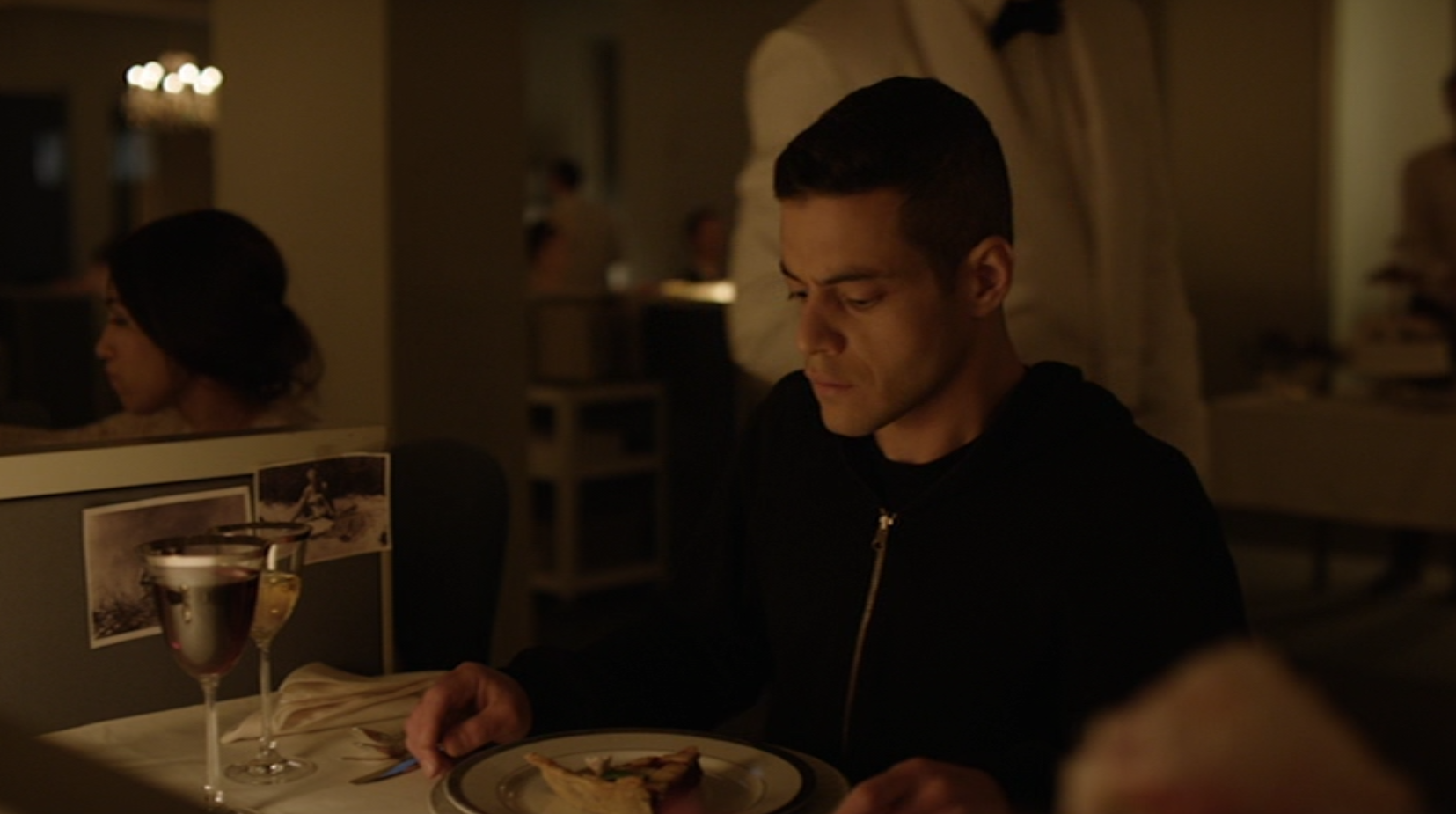
Perhaps this means that everyone is being hacked by the black fish, which represent the reverse contract. Elliot’s friend and colleague Daisy tries to get him to join her, by saying “it’s delicious” and offering him a piece of black fish. Elliot, of course, refuses because he does not want to be hacked.
© Image. Series «MR. ROBOT». Director: Sam Esmail.
The society is a product of having been hacked, of reversing the positive freedom contract, so that people can be controlled from within. Elliot understands the hacked existence to be the definition of “normal” in today’s society.
3. The book connects Elliot’s understanding of freedom with the philosophy of Jean-Jacques Rousseau. Rousseau famously observed that human beings are born free, yet everywhere they are in chains. What are the chains Elliot is rebelling against, and how have they been wrapped around everyone’s wrists?
Elliot sees people as enslaved to themselves. Even further, he suggest that the removal of this enslavement would be a contract that frees you from yourself. So it seems that Mr.Robot is a meditation on a concept that Isaiah Berlin calls Positive liberty. Positive liberty has two ideas. First, humans are divided between a higher form of themselves and a lower form. Second, it assumes that the lower form of the self can operate as a slave master to the higher form of the self. Therefore, when you are overwhelmed with desire you lack freedom. So freedom is understood as the ability to accomplish your goals, and your own weakness can prevent you from accomplishing those goals, then you can be enslaved from within.
So daemons are not imposed on us from the outside, they govern what we do from within. In this sense, to be free from debt slavery as fsociety wants, does not perfectly explain the way Elliot see freedom, as he recognize it is a cause of slavery.
Intentions don’t drive us, our higher goals and our higher self doesn’t determine what we do. Instead it’s the daemons who take control. Elliot even goes so far as to say that daemons seduce, manipulate, and own us. That sense of being owned by the daemons echoes Rousseau’s idea that “Obedience to appetite is mere slavery”. One of the most common examples of obedience to the lower self is addiction.
THE CONTRADICTION OF REVOLUTION
The central contradiction of Mr. Robot is that the desire to liberate people can itself lead to destructive consequences. Elliot and fsociety want to dismantle an unjust system, but their actions create economic disruption that harms ordinary people. The question is therefore not simply whether we should change the world, but how we should do it, and what happens when the means used to achieve freedom undermine the freedom we are trying to protect.
Nietzsche’s warning at the beginning of this article becomes particularly relevant here. When fighting monsters, there is always a risk of becoming one. A revolution that seeks to destroy a system of control may reproduce the same logic of domination if it fails to consider the consequences of its actions.
Ultimately, Mr. Robot resonates with our time because it questions not only who holds power, but also how power operates through our own behavior. It asks whether we can truly change the world without first understanding the forces that control us from within.
SHOULD WE CHANGE THE WORLD, OR ARE WE LEFT HANGING?
The book begins with the words:
“Hello reader.”
And immediately questions that opening:
“‘Hello reader’? That’s lame. I’m copying the show. This is a slippery slope.”
That small exchange captures the spirit of the series that is even when we believe we are doing something original, we may be repeating patterns without realising it.
Mr. Robot leaves us with a question that goes beyond rebellion that is is it easier to imagine the destruction of an existing world than to imagine a genuinely different one? Elliot has the technical knowledge and determination to bring down a powerful system, but the consequences of his actions reveal the gap between identifying what is wrong and knowing what should come next.
This is also a challenge for innovation. Disruption is often celebrated as an achievement in itself, as if breaking established structures were enough to create progress. But destroying the familiar is only the beginning. Indeed, the real creative challenge is to imagine alternatives that do not reproduce the same inequalities, dependencies and mechanisms of control under a different name.
Perhaps the greatest act of innovation is not to become better at hacking the world we have inherited, but to develop the imagination to design a world that does not need to be hacked in the first place.
MAIN REFERENCE
Greene, Richard, and Rachel Robison-Greene (eds.). (2017). Mr. Robot and Philosophy: Beyond Good and Evil Corp. Chicago: Open Court Publishing. ISBN: 978-0-8126-9961-6.

Type of book: Philosophy book
The book explores all of philosophical themes that can be found in the American drama thriller television series Mr. Robot, director: Sam Esmail.
© Image. Series «MR. ROBOT». Director: Sam Esmail.
In 2015, a young man living in New York City, who works at the cybersecurity company Allsafe as a cybersecurity engineer is recruited by Mr. Robot and joins his team of hacktivists known as fsociety. One of their missions is to cancel all consumer debt by encrypting all the data of one of the largest corporations in the world, E Corp which also happens to be Allsafe’s biggest client.
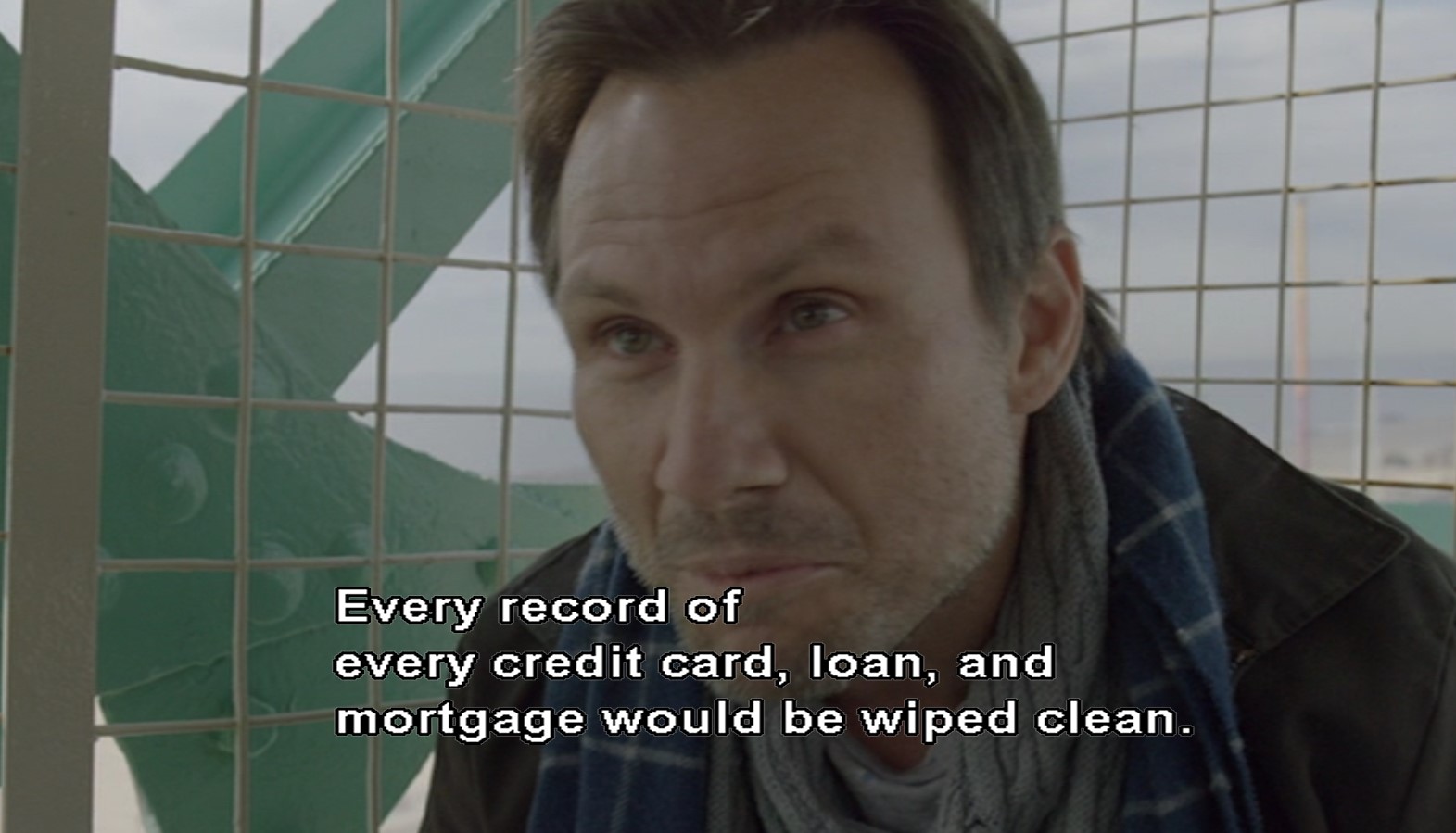
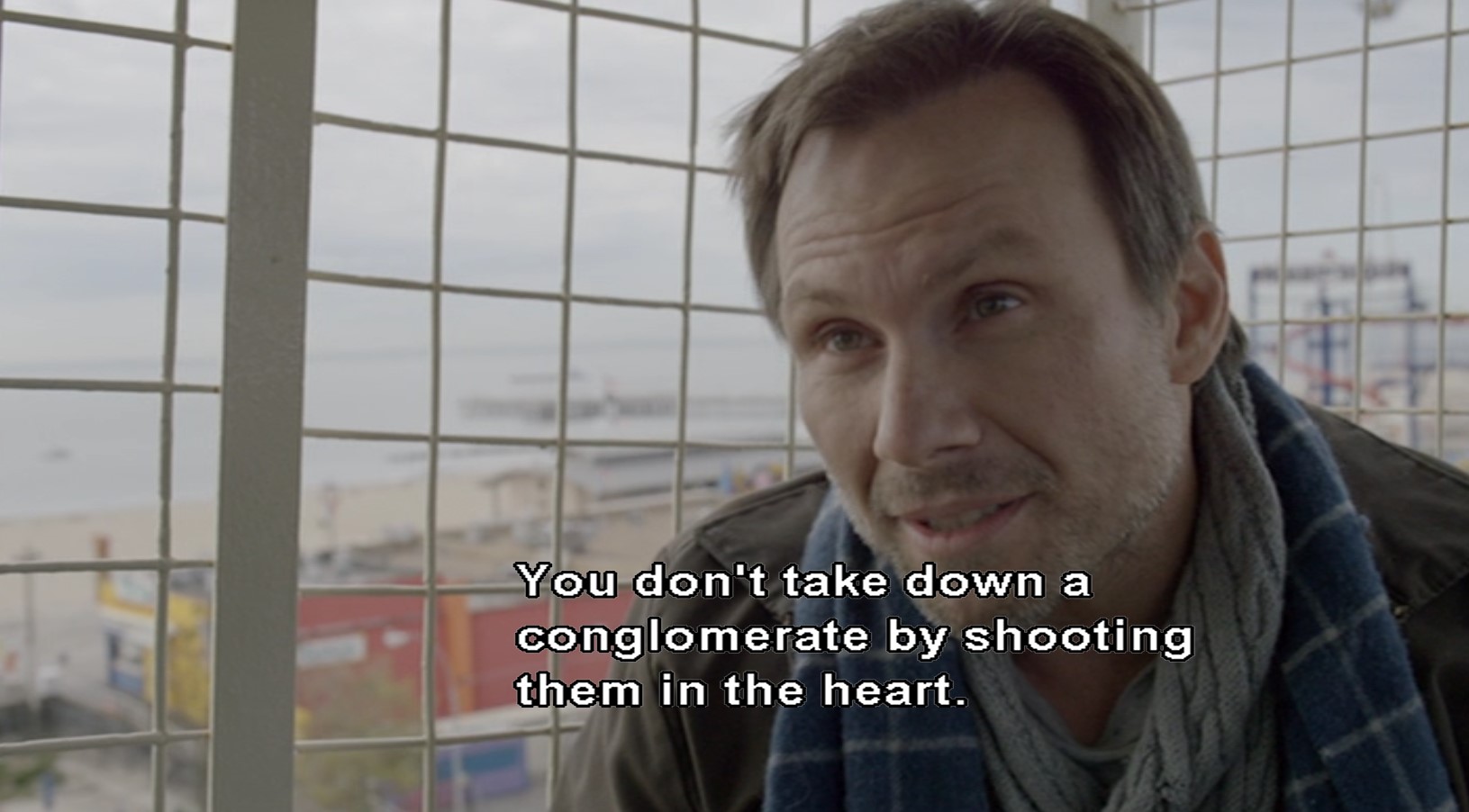
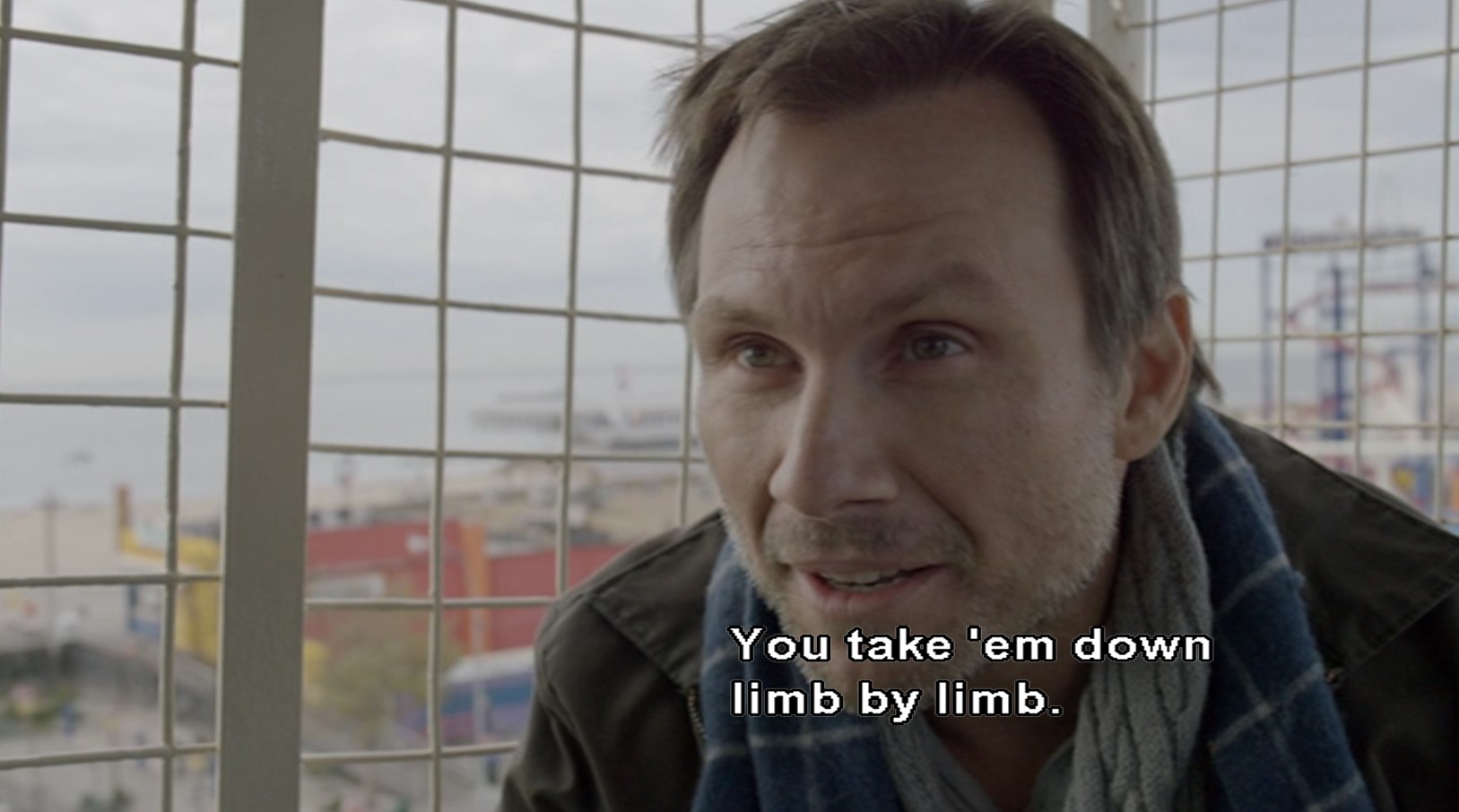
© Images. Series «MR. ROBOT». Director: Sam Esmail.
Names of main characters:
Elliot Alderson: A hacker who recognises that global economic structures are remarkably unjust. He has the tools and skills to successfully initiate his revolution to change, but he doesn’t have the strength to carry on without adopting the person of Mr. Robot, an alternative personality of Elliot who takes the form of his dead father.
Moreover, a senior network engineer at Allsafe Cybersecurity. He has dissociative identity disorder and deals with other mental illnesses such as clinical depression and severe anxiety, which are partly responsible for his antisocial behaviour and drug use.
Darlene Alderson: Elliot’s younger sister, a malware coder and one of the fsociety hackers.
Mr. Robot: The dangerous illusion and the projection of Elliot’s father as well as an instrument of freedom for Elliot. Furthermore, an insurrectionary anarchist who recruits Elliot into an underground hacker group called fsociety.
Angela Moss: Elliot’s childhood friend and a fellow employee at Allsafe, later PR Manager for E Corp. She lost her mother in a toxic spill as a worker of E Corp.
Fsociety: A hacktivist group who wants to use Elliot’s hacking skills to erase the record of all the debts held by the corporation E Corp.
Philip Price: the power CEO of E Corp, who was responsible for murdering his predecessor.
E Corp manufactures personal computing technology and owns seventy percent of the global consumer credit industry.
Tyrell Wellick: A Manager of the E Corp, who is willing to do whatever it, takes to increase his own power and influence, attempting to seduce and then murdering the wife of his competitor for the CTO position at E Corp. Later part of fsociety.
Whiterose: the leader of the Dark Army, a hacker collective based in China, and as a Minister Zheng, the Chinese Minister of State Security.
Terry Colby: The former CTO of E Corp who is framed by fsociety for a hack attack.
The following section contains my personal reading notes and selected excerpts from Mr. Robot and Philosophy: Beyond Good and Evil Corp, chapter 3. These notes include key ideas, philosophical discussions and passages from the book that have informed the reflections developed in this article. Page numbers are indicated in parentheses and refer to the original edition (Open Court Publishing, 2017).
Chapter 3. Click bait for black fish
(26) Rosseau: man can be freed from himself.
(28) Intentions don’t drive us – our higher goals and our higher self doesn’t determine what we do. Instead it’s the daemons who take control. Elliot even goes so far as to say that daemons seduce, manipulate, and own us.
(29). Elliot, vividly aware that daemons control his thoughts set into motion a contract with Shayla that ensures she will not listen to him when they take over.
(41) In the opening episode of Mr. Robot, Elliot tells us about a group of super-rich people, “the top one percent of the top one percent”, who are “secretly running the world”. Elliot is referring to Evil Corp. they run the world and set the rules by which ordinary citizens have to live, and they hold a huge proportion of the population in what amounts to debt slavery.
(61) In a revealing conversation at the beginning of the tenth episode of Season Two, Philip Price, CEO of E Corp reveals that his sole motivation in life is always to be the most powerful person in the room.
(62) Philosopher Michael Foucault (1926-1984) wrote extensively on power and different types of power. And one of the most crucial features of power for Foucault, which throws a wrench in Price’s plan, is that power is not something that can be possessed by a person. Power is something that operates. What means is that power works through social institutions and social practices.
According to Foucault, power has worked differently over the course of history. People used to have to answer to kings or central authority figures, and these kings have the power over the life and death of their subjects. Foucault refers to that type of power as “sovereign power”…but according to Foucault, in the eighteen and nineteenth centuries, a different power emerged – disciplinary power.
With disciplinary power people are regulated by rules and social norms that work without any one person in charge of them. We even regulate ourselves.
(63) One of the key features of disciplinary power is surveillance.
(64) But the power of surveillance isn’t held in any one person’s hand… Internet is the modern-day panopticon.
(107) I am just one of the many victims of the forty-hour workweek
(111) In Marx’s view, all historical conflicts can be boiled down to class struggle… Marx saw revolution as a justified means for the proletariat to use because there is no other way to put an end to the class struggle. Only through these means can we give birth to a prosperous and peaceful society.
(115) Because in my heart I shall always believe, E Corp is an unnecessary evil taken down necessarily by revolutionary force.
(123) the resentment of the slave class is powerful enough to invert our system of values. But the new value system is unnatural. Gods are created to reinforce it (Nietzsche)…Elliot wants to give power to the people. The people want this too, or at least, it would seem that they do. The 5/9 hack may just be the event that can make that happen… unlike the slave class Nietzsche describes, the oppressed people that Elliot hopes to save are complicit in their own subordination… the world that Elliot finds himself in (and, indeed, the world in which we find ourselves) is one that is populated by people who scream for change but don’t really want to take the steps necessary to bring it about.
TELEVISION SERIES REFERENCE
Mr. Robot (2015–2019). Created by Sam Esmail. United States: USA Network. 4 seasons, 45 episodes. Starring Rami Malek, Christian Slater, Carly Chaikin, Portia Doubleday and Martin Wallström.
Official series page – Universal Pictures:
https://www.universalpicturesathome.com/tv/mr-robot-the-complete-series
ADDITIONAL REFERENCES
Nietzsche, Friedrich. Beyond Good and Evil: Prelude to a Philosophy of the Future.
Rousseau, Jean-Jacques. The Social Contract.
Berlin, Isaiah. “Two Concepts of Liberty” (1958).
ADDITIONAL MATERIAL: ARTICLES, REVIEWS AND VIDEOS
ARTICLES AND ONLINE RESOURCES
-
“Mr. Robot – TV Episode Recaps & News” — Vulture.
https://www.vulture.com/tv/mr-robot/ -
“Mr. Robot Creator Sam Esmail: ‘The World Has Become Unreliable’” — The Guardian, 17 October 2017.
https://www.theguardian.com/tv-and-radio/2017/oct/17/mr-robot-creator-sam-esmail-the-world-has-become-unreliable -
“Mr. Robot: Episode by Episode” — The Guardian.
https://www.theguardian.com/tv-and-radio/series/mr-robot-episode-by-episode -
“Mr. Robot” — Wikipedia.
https://en.wikipedia.org/wiki/Mr._Robot -
“Mr. Robot’s Rami Malek Explains How HBO’s The Pacific Prepared Him for Darker Roles” — Polygon, 6 July 2016.
https://www.polygon.com/tv/2016/7/6/12109546/mr-robot-rami-malek-second-season -
“Mr. Robot: Red Wheelbarrow” — Sam Esmail and Courtney Looney. Review published by IndieWire.
https://www.indiewire.com/2016/11/mr-robot-book-red-wheelbarrow-review-spoilers-1201742868/
VIDEOS
-
“Mr. Robot – Season 1 Official Trailer” — YouTube.
https://www.youtube.com/watch?v=0QHrvrwcUSs -
“Mr. Robot – Where’s My Mind?” — MinimalistVideos.
https://www.youtube.com/watch?v=OggJKWL-iNE
RELATED BOOKS
-
Esmail, Sam, and Courtney Looney. Mr. Robot: Red Wheelbarrow.
PERSONAL READING NOTES AND SELECTED EXCERPTS
The following section contains my personal reading notes and selected excerpts from Mr. Robot and Philosophy: Beyond Good and Evil Corp. These notes include key ideas, philosophical discussions and passages from the book that have informed the reflections developed in this article. Page numbers are indicated in parentheses and refer to the original edition (Open Court Publishing, 2017).
MR ROBOT
2022
1
Mr. Robot and philosophy
1. There is an evil Corporation who pretty much control the whole kingdom of bullshit.
Mr. Robot and some plucky folks attack this Evil Corporation by hacking into its computers, bringing it to its knees. ( the Evil Corporation)
Hello, that’s lame. This is a slippery slope. You look stressed. This is about your debt? Your debt is crushing you. It’s giving you panic attacks. The limitations of choice within an oppressive society.
You thought everything was gonna be hunky-fucking-dory?
2. You and I have lived in the kingdom of Bullshit for all too long. Given that we want out of Bullshit kingdom, the necessary deed has to be a very big one. People who has been enslaved need to be freed. And it’s going to take a substantial action to knock off (stop work) our shackles (prevent you do what you want). But the size of the problem makes a significantly large action necessary. A new Society rises from the ashes. (from ruins)
I do not have the solutions for you. I’m just pointing out what’s at stake.
3. Plato is one of the Western civilization’s earliest and harshest critics of the arts. Poetry to the ancient Greeks is all narrative art.
2
The world around us is a mere imitation of a higher reality of immaterial objects known as the Forms, which are true.
Studying the Forms leads to mere belief rather than knowledge. Even worse, studying the arts, mere imitations of imitations of reality, leads to imagination, lacking knowledge or even belief.
Plato spends a great deal of time theorizing about the nature of a perfect society, in which everyone has a function best suited to their abilities: a class of people who serve as guardians, subdivided into two classes: the [auxiliaries], and the rulers.
Aristotle, Plato’s most famous pupil, the arts come in handy to show us examples of people and societies that we can consider for imitation. The arts can provide what things we should see as good, and therefore worthy of imitation, or bad, and therefore not.
Also the arts show us the flaws of good people and how unvirtuous actions that stem from such flaws inevitably lead to a kind of moral retribution (punishment).
Elliot’s invention and use of the Mr. Robot personality, the illusion of another person allows Elliot to ease himself… to move gradually.
3
into the society that he has created.
It gives him the temporary safety net of pretending that the real responsibility lies with someone else. Eventually, Elliot steps up and claim responsibility for Fsociety, and is ready to move without the need of Mr. Robot.
Mr. Robot insists that the distinction between reality and mimesis is far less clear than we would like to believe.
As Mr. Robot concludes: You have to dig pretty deep, kiddo, before you can find anything real. We truly live in a kingdom of bullshit! A kingdom you have lived in for far too long. So, don’t tell me about not being real! I’m no less real than the fucking beef patty in your Big Mac.
That is the overarching message of the show. (most important)
3 – click bait for Black Fish
What are the chains he is rebelling against and how have they wrapped on everyone’s wrist? Elliot sees people, in part, enslaved to themselves.
Rousseau: «man can be freed from himself».
Jim is unfree when he is acting on his lower desires and free when he is acting on his higher goals.
Positive liberty: higher self and lower self. Freedom is to accomplish your goals, but when your own weakness prevent you from accomplishing these goals, you are enslaved from within.
4
Fsociety wants to free people from debt slavery.
Intentions don’t drive us — our higher goals and our higher self does not determine what we do. Instead it is the daemons who take control.
«Obedience to appetite is mere slavery» -> Rousseau.
Capitalism encourages companies to hack people, to tap into their addictions so that they keep buying products.
Sugar addiction. Sugar, like any other addiction, can override rational decision-making.
Click bait. When websites receive a lot of visitors, what is the easiest way to get people’s attention? With entertainment that appeals to our daemons.
Black fish. Everyone is being hacked by the black fish, who represents the reverse contract.
The end of privacy.
Elliot: hacking skills to violate the privacy of others, sometimes leading him to take the law into his own hands. And expose people who are involved in illegal activities.
Thomas More, book Utopia: The law, which should protect those who have the least, has been perverted to protect those who have the most. -> The conspiracy of the rich.
Evil corp. chemical leak. In a world where the rich hold the power, even the clearest matter.
5
in the world can be made cloudy and truth itself into question, through a legal (vauo) loophole.
the very right to privacy we think keeps us safe also allows injustices in the world, covered.
So maybe we should thank Julian Assange, Edward Snowden. Maybe they are helping to tear down the veil of privacy that allows injustice to be perpetuated.
Have we become the grid?
This is only the tip of the iceberg.
How has the power?
Phillip Price, CEO of Ecorp, reveals that his sole motivation in life is always to be the most powerful person in the room.
Even after the 5/9 hack, he remains at the company’s helm officially controlling.
Foucault wrote on power. Power is not something that can be possessed by a person. Sovereign Power -> kings. Disciplinary power -> People are regulated by rules and social norms.
One of the key features of disc. power is surveillance. The power of surveillance is not held in any one person’s hands.
Power and knowledge are related.
In a capitalistic Society we tend to associate wealth with power.
The constant surveillance is closer to a reality than Foucault knew at the time of his death in 1984. Power is dispersed. Anyone could be watching you. Anyone can be a hacker.
Power is in the surveillance that anyone can perform.
Price will never be the most powerful person in the room.
6
What kind of revolutionary is Mr. Robot?
Where did these ideas come from? Sources.
David Graeber who influenced Occupy Wall Street. On September 17th 2011, nearly four hundred people flooded into Zuccotti Park in New York’s Wall Street. They expressed frustration at the recent government bailout of big banks after the financial crisis, growing income inequality, powerlessness and scaling consumer debt.
Mr. Robot’s hacktivist philosophy: This propensity toward action points in the direction of pragmatism, but the overall objective of the action and domination — has its roots in anarchism.
It could be said that Mr. Robot’s means are pragmatism while his ends are anarchist.
Karl Marx wrote that the point of Communism is to change the world, not to philosophize about it. Even though Mr. Robot isn’t a Marxist, he can appreciate what happens when you have too much philosophizing, not enough action. The danger is that the window of opportunity to act and change the world will pass.
Ideas can change the world, but it takes bodies and force if you want to make it happen now.
7
Mr. Robot, Mad son of Noir
The genre known as film noir was worn in America around World War II. Mr. Robot is a neo-noir thriller for our time.
By 2015, we get Mr. Robot, in which all of our central characters seem to be undergoing mental breakdowns under the stress of modern life.
Noir thrillers:
Stranger on the Third Floor (1940)
The Maltese Falcon (1941)
The Big Sleep (1946)
Neo-Noir:
• Chinatown
• Dr. No (1962)
• Quantum of Solace (2008) / James Bond
• Fight Club (1999) David Fincher
• American Psycho (2000) Patrick Bateman
Skepticism
Philosophical skeptics believe that knowledge is systematically ruled out.
Seventeenth century, René Descartes wrote «Meditations on First Philosophy». Descartes raised a number of skeptical scenarios, all designed to cast doubt on our beliefs about the external world. Everything he is experiencing might be a dream.
Elliot, at any given moment, cannot know whether what he’s experiencing is just a dream.
Elliot lacks knowledge because, given this propensity to believe things that aren’t true, always lacks justification for his belief.
Politics is for puppets.
8
10) joined the organization known as Fsociety. They were a rag tag (disorganized) group of people like me that were fed up (annoyed) with having our blood sucked by rich scumbags (unpleasant person) and corporations whose only green cause is the money they print while they do an unspeakable damage to the planet.
We have destroyed the line between the digital and the physical to the point that we no longer see any difference between the two.
• Is a revolution only unjustified when it jails?
Edmund Burke. 1723-92, Conservatism. Rejects revolution as an unjustified act because to him it always causes a given society’s traditions and history to be destroyed thereby leaving it unstable.
What fears could someone like Burke instill in me? The hack destroyed the American economy, credit cards no longer work, garbage (rubbish) is piling up because private businesses can no longer afford waste management. And the blackout that occurred throughout the entire city.
Karl Marx. The bourgeoisie is the class that owns all the power and influence in the form of property, wealth and productive resources. The working class who produce the wealth. Marx’s Solution: Revolution.
In Marx’s view, all historical conflicts can be bowled down (reduce) to class struggle.
9
Positives about 5/9 hack:
• We sparked protests around the world
• We tapped into the anger of the people over wealth inequality
• We created an unified front among all the poor and downtrodden
• We brought Ecorp themselves to their knees, so much so that they sought out (seek out) China for a bailout after the US government denied them.
• We also wiped all banking records, giving everyone a clean slate. (borrón y cuenta nueva)
Why we drag our heels while Ecorp continues to globe and crack the whip (cátigo) upon all our backs?
Nielsen. Revolution of the kind that Marx imagined was only permissible if there was no other course of action that could be taken?
know in a democratic society such as ours, there are multiple courses of action that anyone who wants to make change take. But all of these courses of action become meaningless in the power of global corporations.
Power is never an accident and neither is greed, the powerful people always will use force on others to get what they want. So if they use force to take from the innocent, the only way we can give back to the innocent is through force in kind.
Ecorpt is an unnecessary evil taken down necessarily by revolutionary force.
10
11) The world that Elliot finds himself in is one that is populated by people who scream for change but don’t really want to take the steps necessary to bring it about. If we want the world to be run by alternatives to the elite, by alternatives to billionaires with corporate interests, we need to have some value system to which we can commit ourselves that is bigger and more powerful than the system handed to us by the corporate gods. We don’t have that, and that is, at least in part, why Elliot’s revolution didn’t have the effect that he intended.
13. How to become revolutionary
According to Deleuze we become revolutionaries at the very moment we turn up our hoods and set about trying to bring something new to the world. The moment we act in defiance to those who tell us we cannot is the moment we become revolutionary. And this revolution is guaranteed success precisely because it is an affirmation of our capacity to act in a world populated by states and corporations that try to condition our actions.
Yet the real price we pay in avoiding the catastrophe of unregulated desires is the threat of over-regulation.
Elliot: The world is a place where all our choices are already conditioned by those who wish us to be nothing more than pawns.
12
Whistleblower. Angela like Chelsea Manning who released sensitive material to WikiLeaks about Iraq, Afghanistan, military reports.
Quote from US founder father Patrick Henry:
«The liberties of people never were, nor ever will be, secure, when the transactions of their leaders will be concealed from them»
(hide)
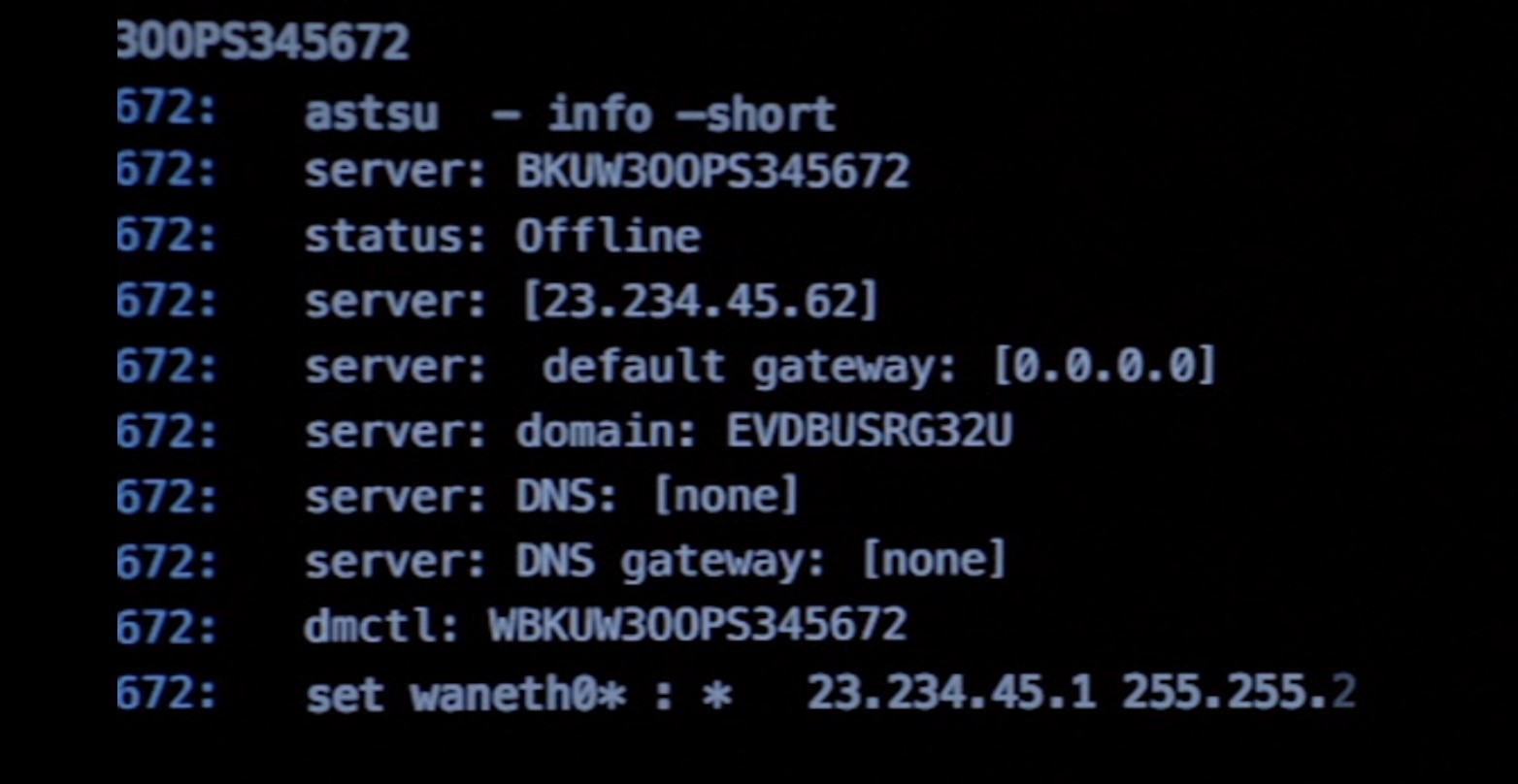
© Image. Series «MR. ROBOT». Director: Sam Esmail.
«Hello reader.
«Hello reader»? That’s lame. I’m copying the show. This is a slippery slope.»
(That is how start the book).
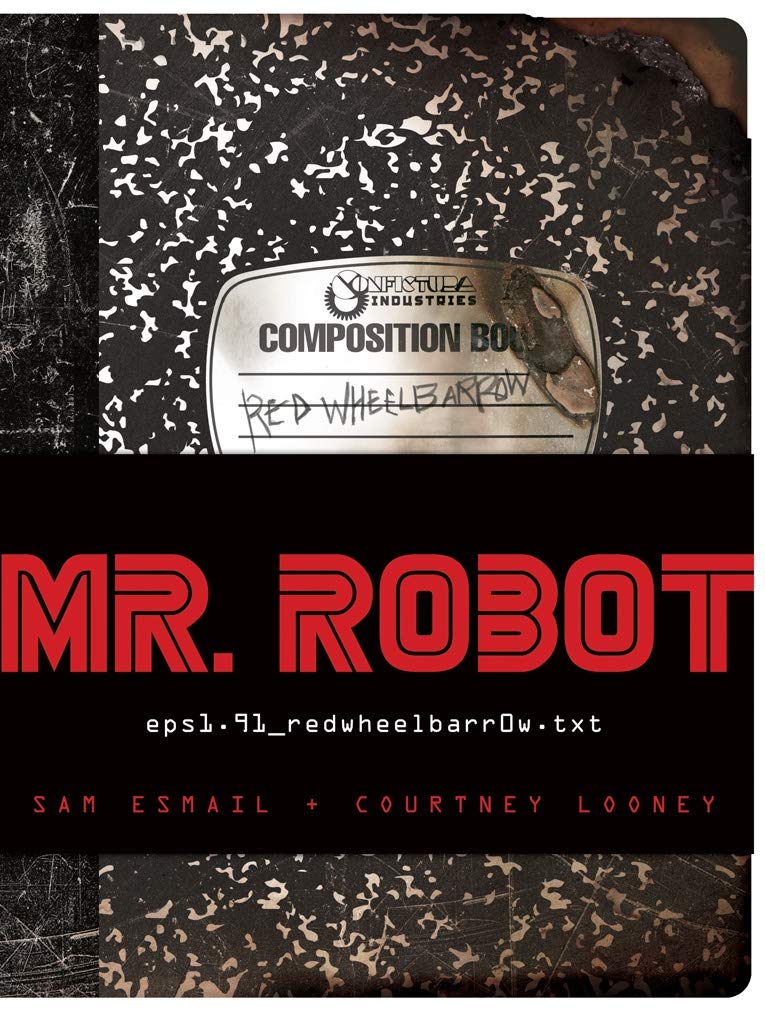
Image from the book Mr. Robot Red Wheelbarrow
 Contenido Web de Yolanda Muriel está sujeto bajo Licencia Creative Commons Atribución-NoComercial-SinDerivadas 3.0 Unported.


