Over the last thirty years, we have witnessed the increasing power of cinema. Although traditional television has lost much of its influence because of digital entertainment platforms such as Netflix, cinema has not disappeared. On the contrary, it has become an increasingly powerful window into our society, also exploring new possibilities created by the digital revolution, from video cameras to mobile phones and social media.
On the one hand, as we leave the past behind and move towards the digital age, we should not forget where cinema comes from. The history of film can become a source of inspiration for creating something new. A good example is the project created by Nicolas Winding Refn, the director of films such as Drive and Only God Forgives. His website, byNWR.com, is a free streaming platform where guest editors present original material — including films, videos, photographs, music and essays — around an old or forgotten film.
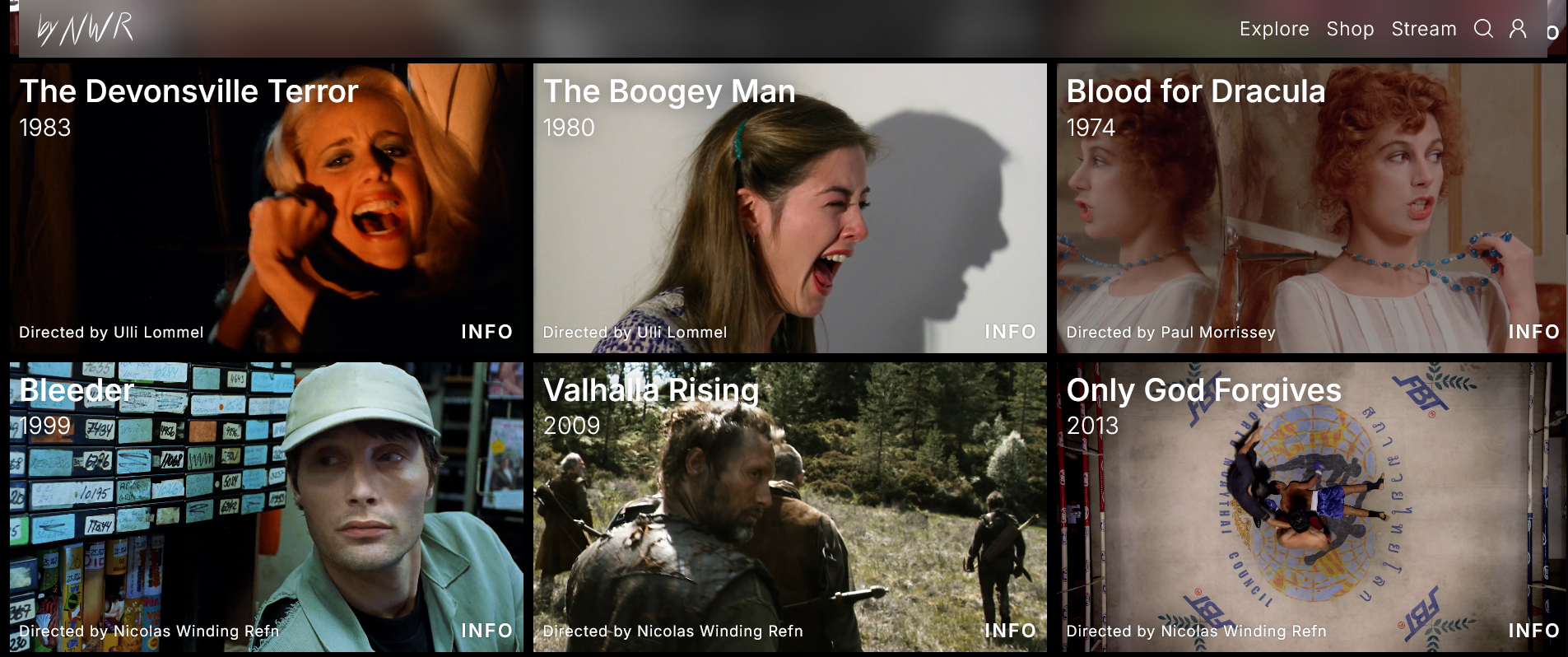
© Image. https://bynwr.com/videos
What makes this project interesting is that the old film is not simply reproduced or shown again. It becomes the starting point for a new digital experience. Cinema, therefore, can expand beyond the film itself and connect with other forms of culture and communication. In this sense, social media and digital platforms should not be seen as competitors to cinema, but as tools that can extend its life and create new relationships between films and audiences.
On the other hand, much of the cinema industry still follows a traditional model in which films are produced primarily to maximise profits as quickly as possible. As a result, audiences can sometimes find themselves watching films that offer little new, artistic or original content. The problem is not necessarily the technology being used, but the way the possibilities of that technology are understood, the problem is not the technology itself, but the fact that the traditional business model has not changed as much as the technology around it.
The new era of cinema should therefore not simply mean making traditional films with digital cameras. It should mean thinking differently about what a film can become in a digital society. Cinema can combine films with archives, photography, music, essays, social media and other forms of digital content. More importantly, filmmakers and entrepreneurs can create their own platforms and develop a direct relationship with audiences instead of depending entirely on traditional distribution channels.
This is what makes Nicolas Winding Refn’s project particularly interesting from an entrepreneurial perspective. With byNWR.com, he did not simply make another film or reproduce an existing cinema business. He transformed his knowledge and interest in cinema into a digital platform with its own identity. Old films became the starting point for new content, new collaborations and new ways of reaching audiences. His example shows that entrepreneurship in cinema does not necessarily mean producing more films; it can mean finding a new way to give value to cinema.
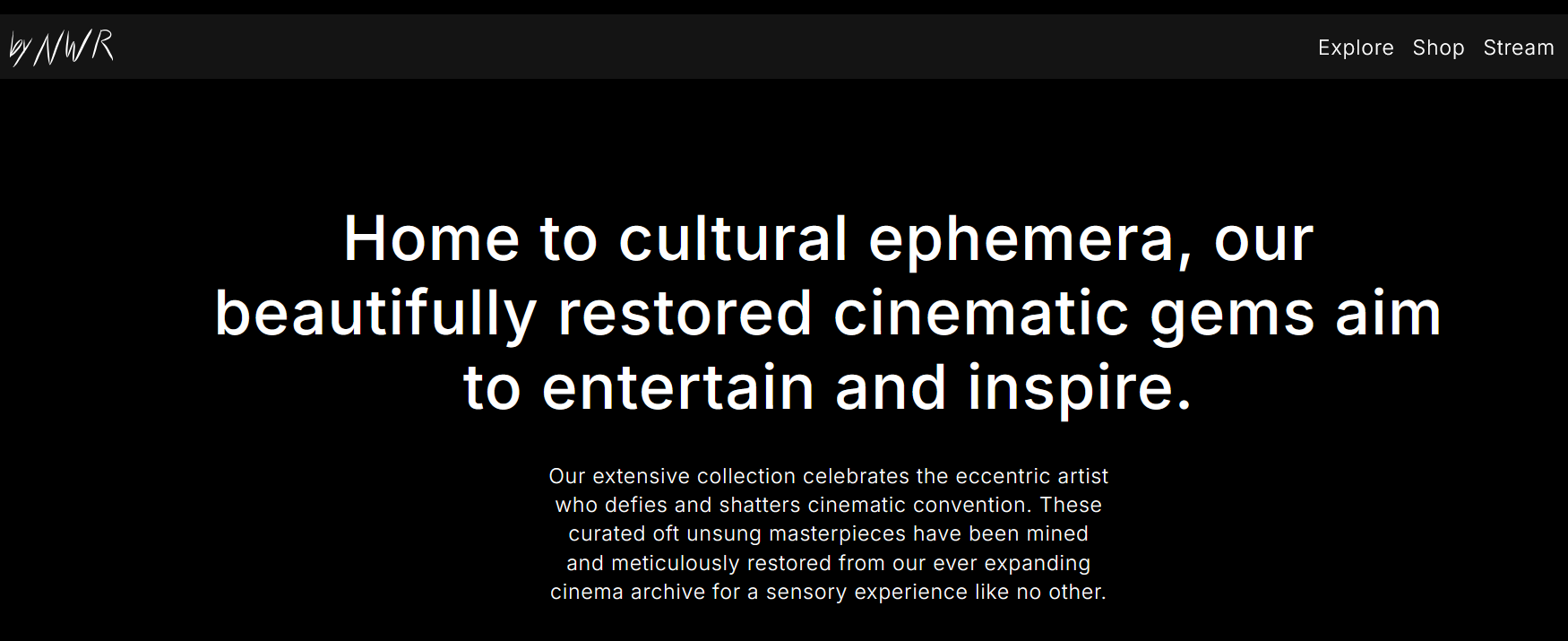
© Image. https://bynwr.com/videos
For future entrepreneurs, this could be one of the most important changes in the industry. Instead of asking only, «What film can we make?», they should also ask, «What can we build around cinema?» A digital cinema business could be a platform, a community, an archive, an educational project or a combination of different cultural formats. The entrepreneur’s role is to identify what traditional cinema leaves unexplored and use digital technology to turn that space into something valuable for audiences.
The cinema of the new era should not compete with digital culture but become part of it. Nicolas Winding Refn is an example of how an entrepreneur can take something from the past, reinterpret it through today’s technology and create a new model around it. Perhaps the real opportunity is not to invent a new cinema, but to discover new businesses hidden inside the cinema we already have.

Nicolas Winding Refn
 Contenido Web de Yolanda Muriel está sujeto bajo Licencia Creative Commons Atribución-NoComercial-SinDerivadas 3.0 Unported.


